Why I built it
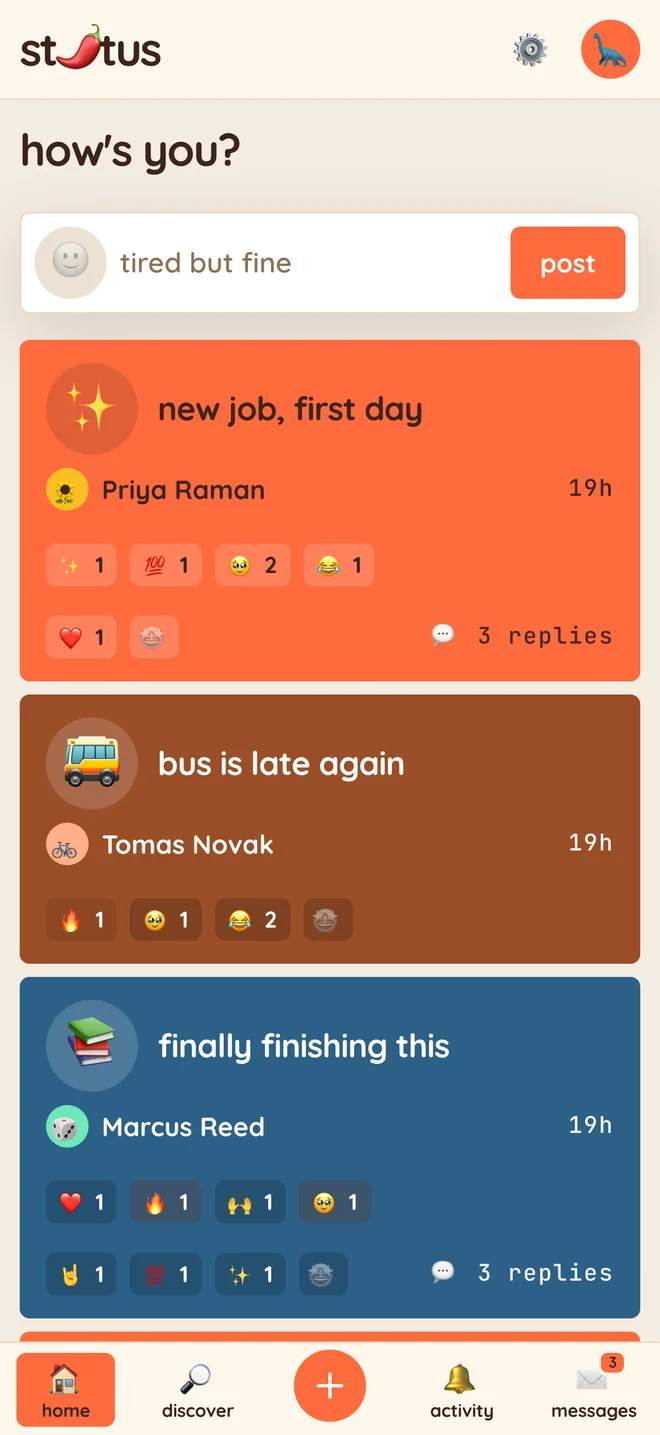
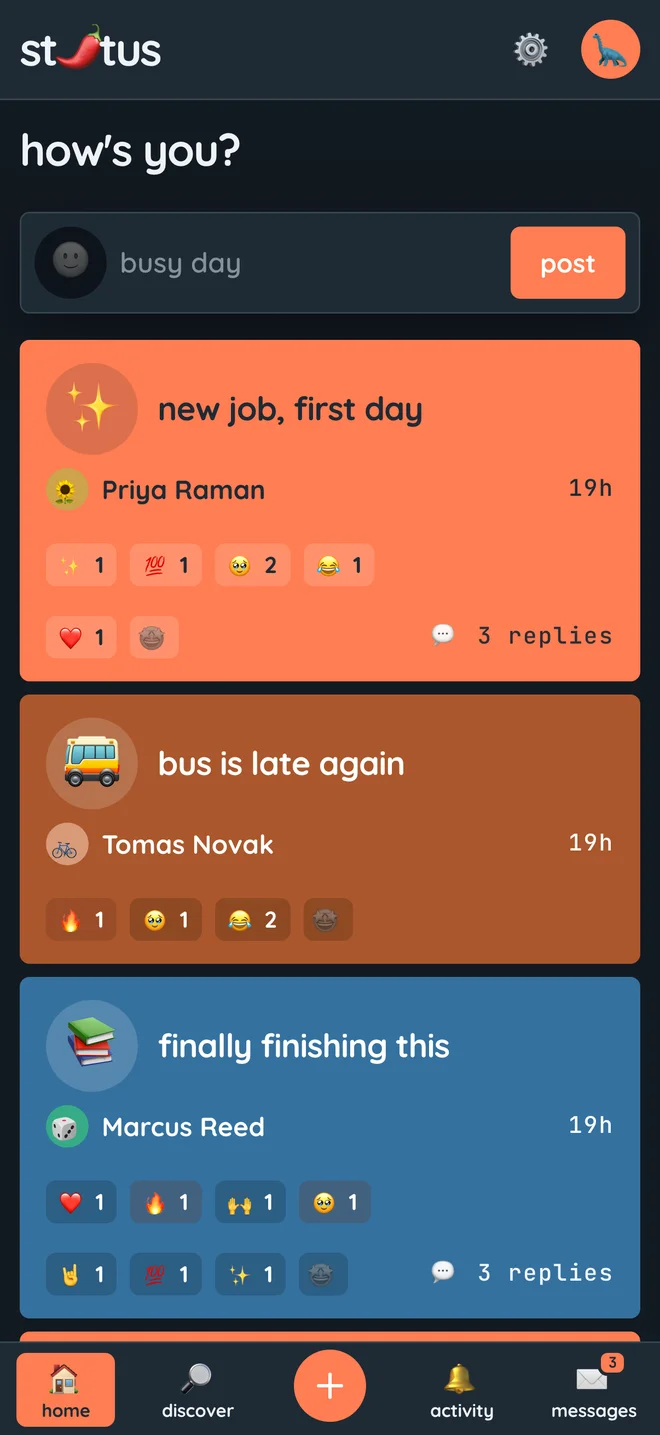
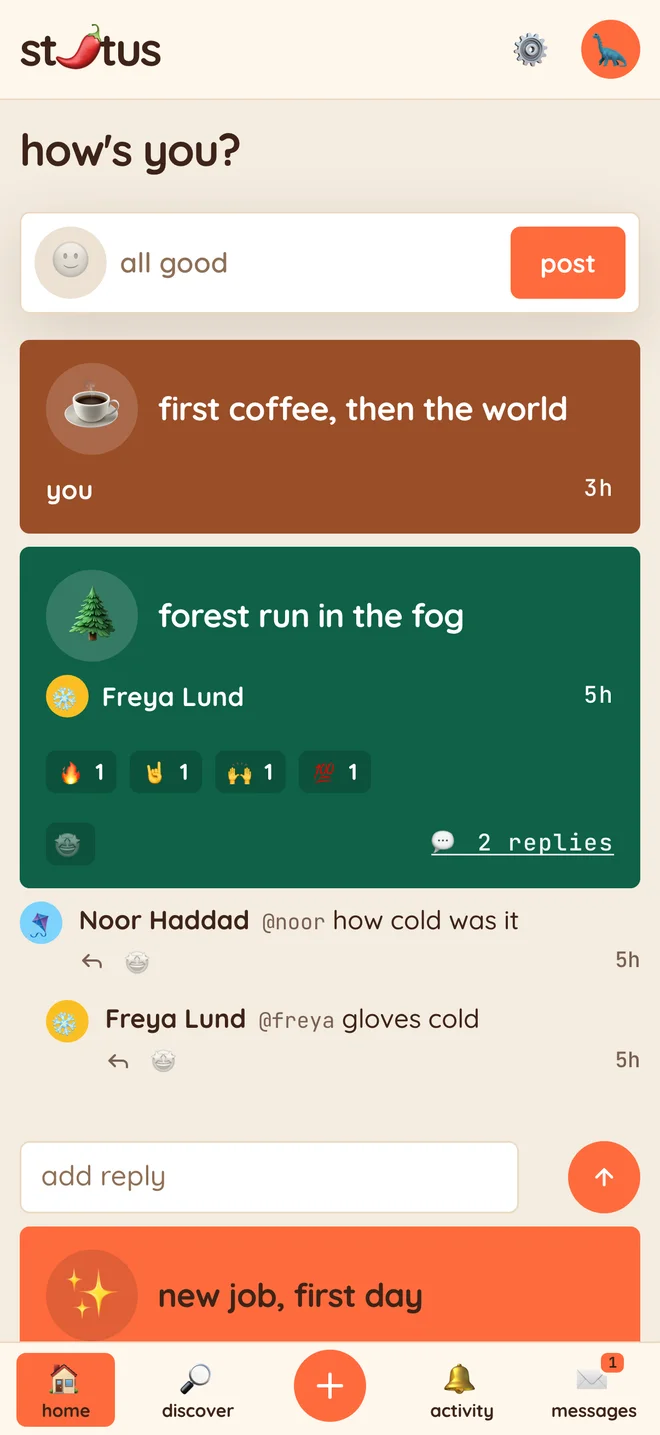
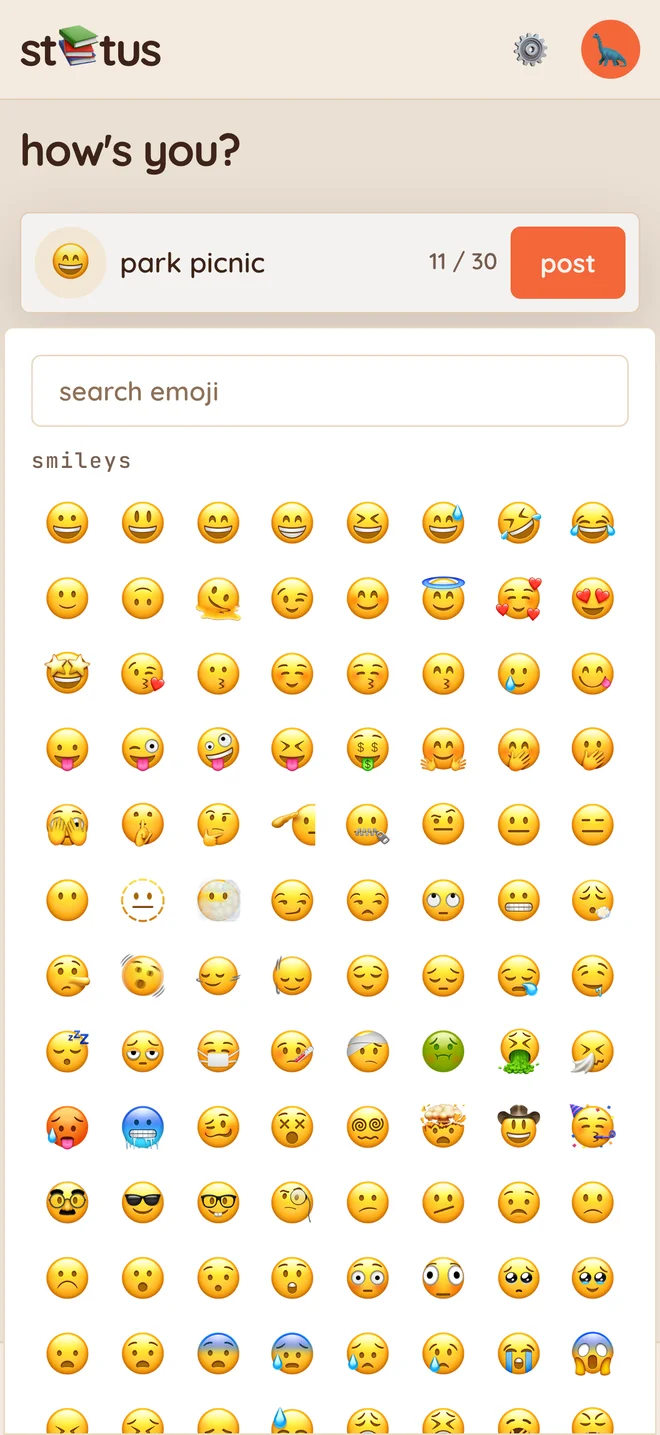
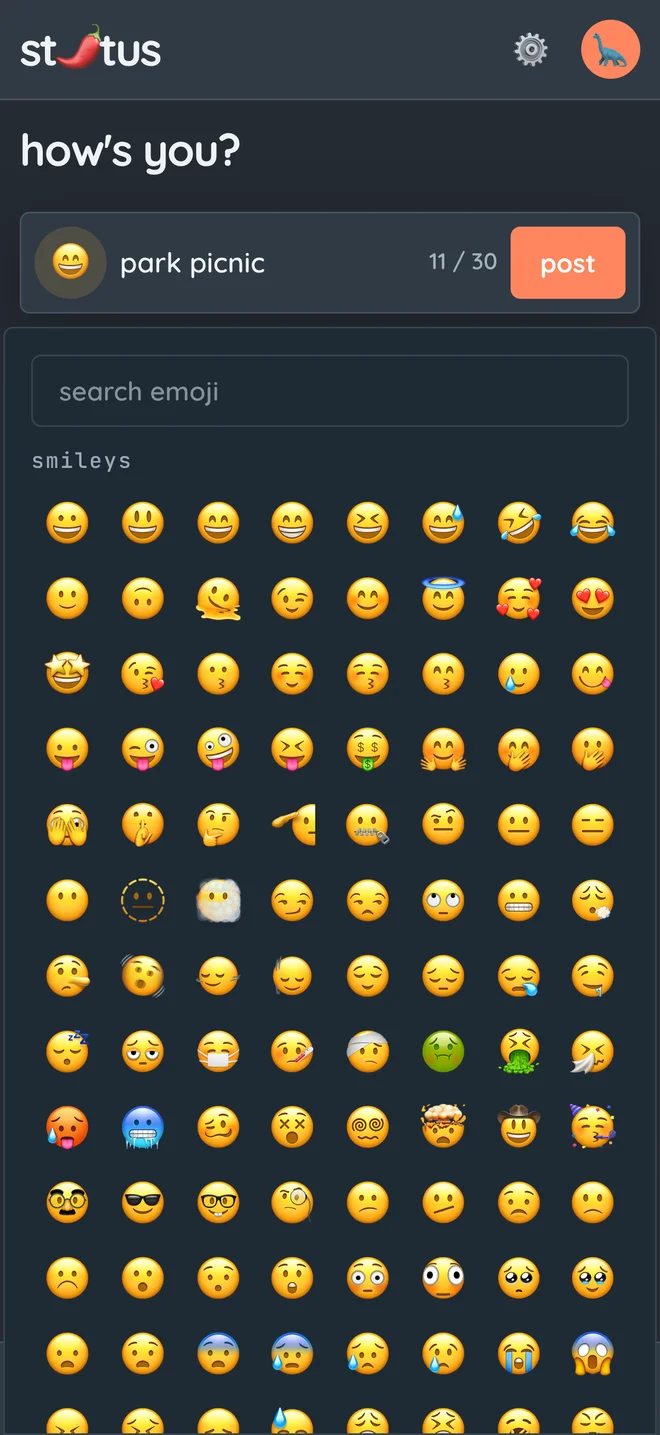
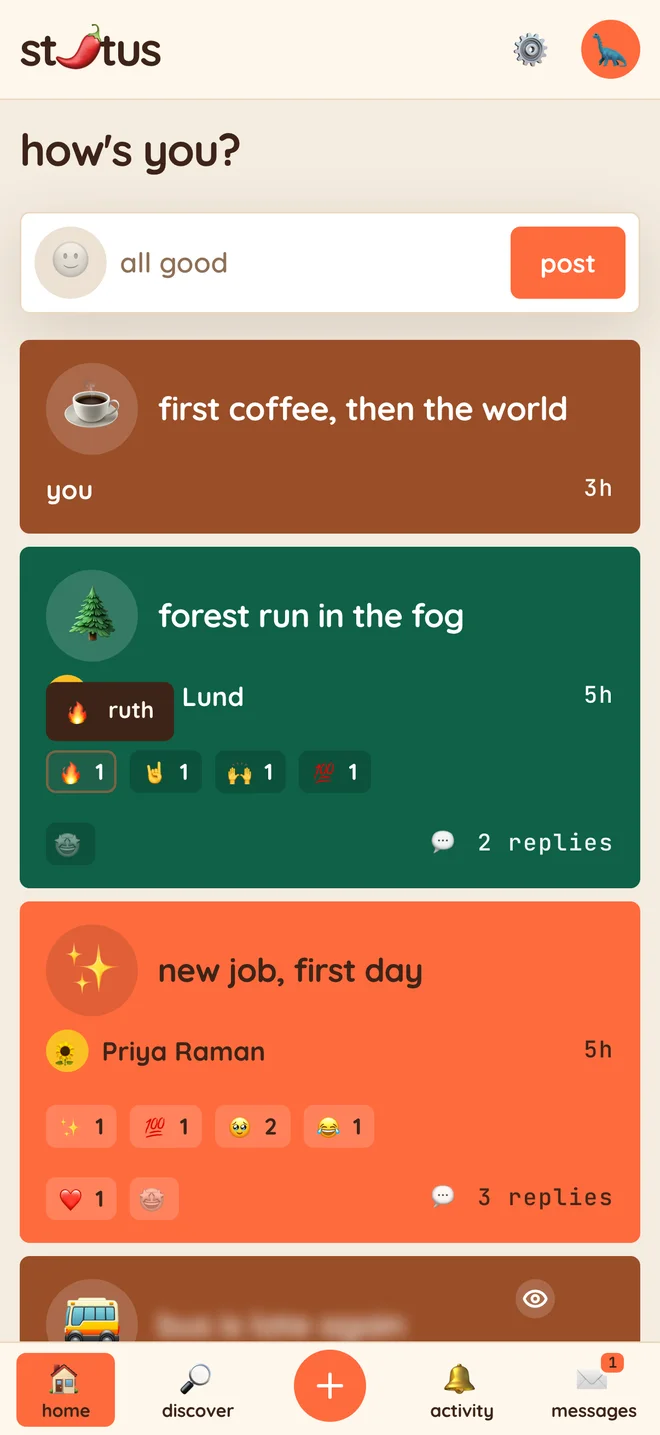
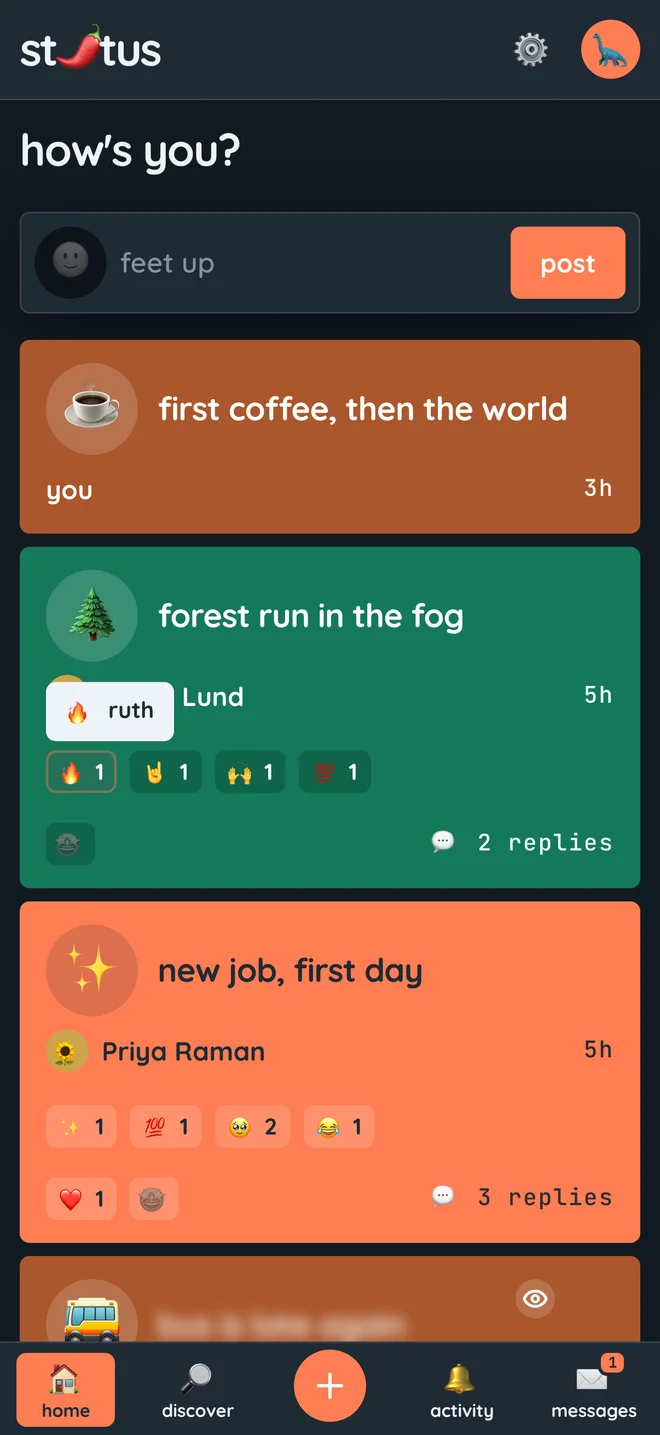
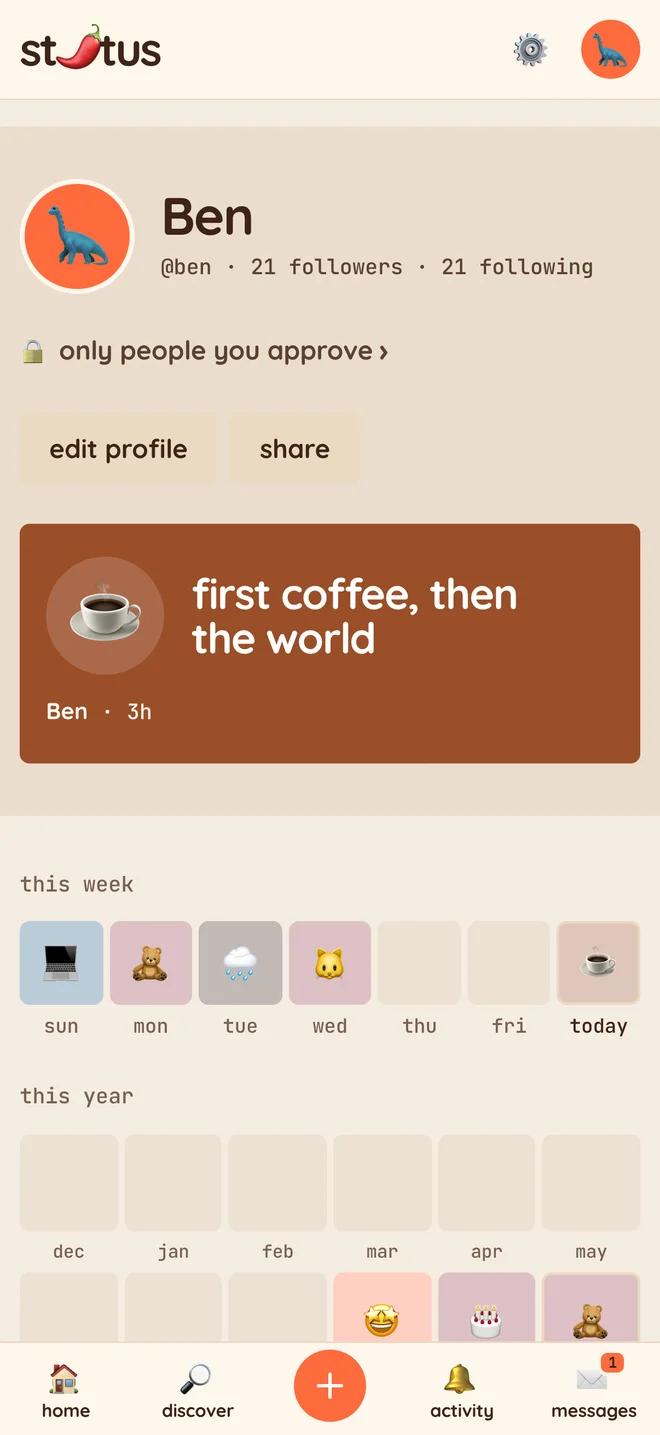
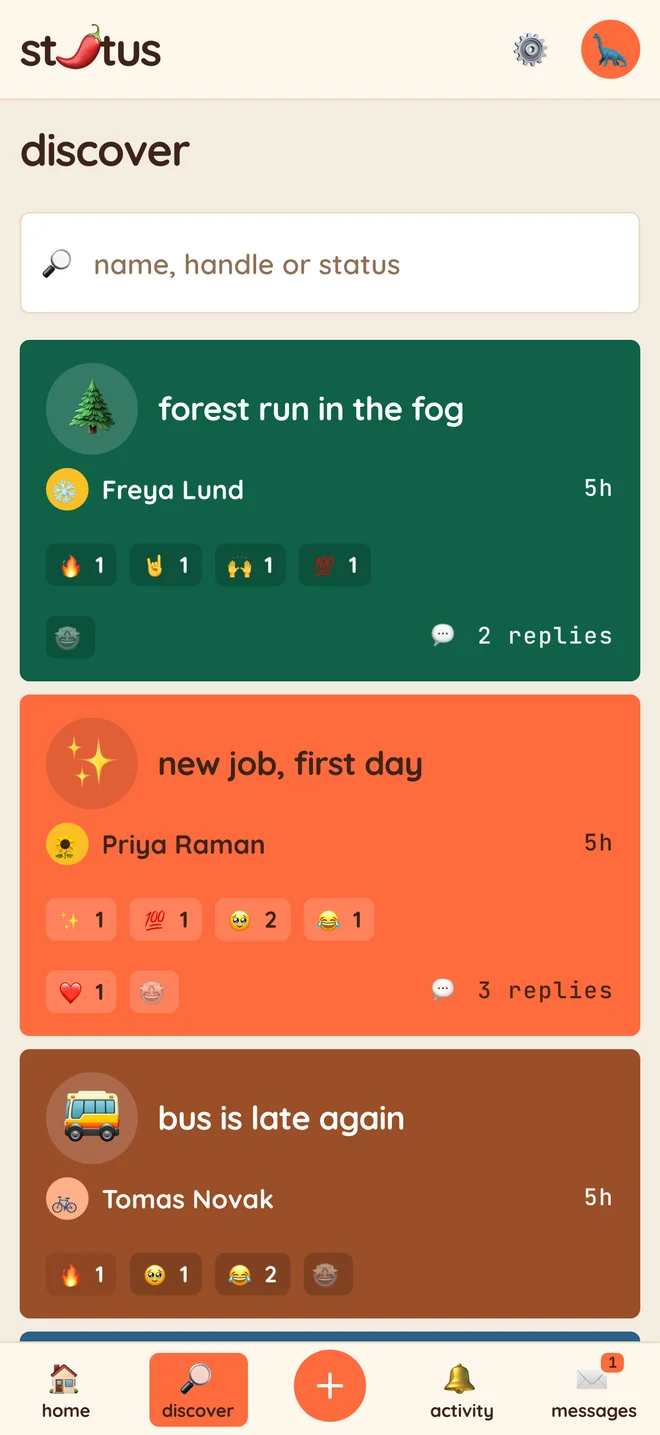
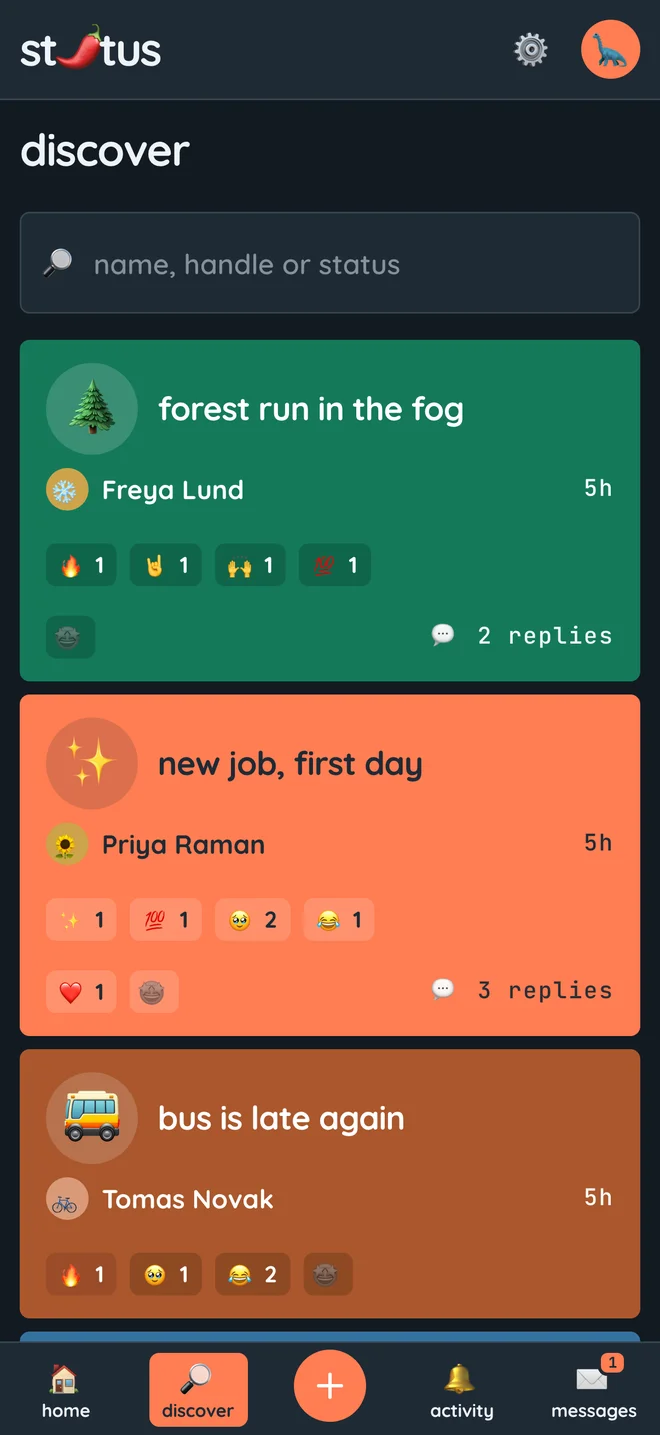
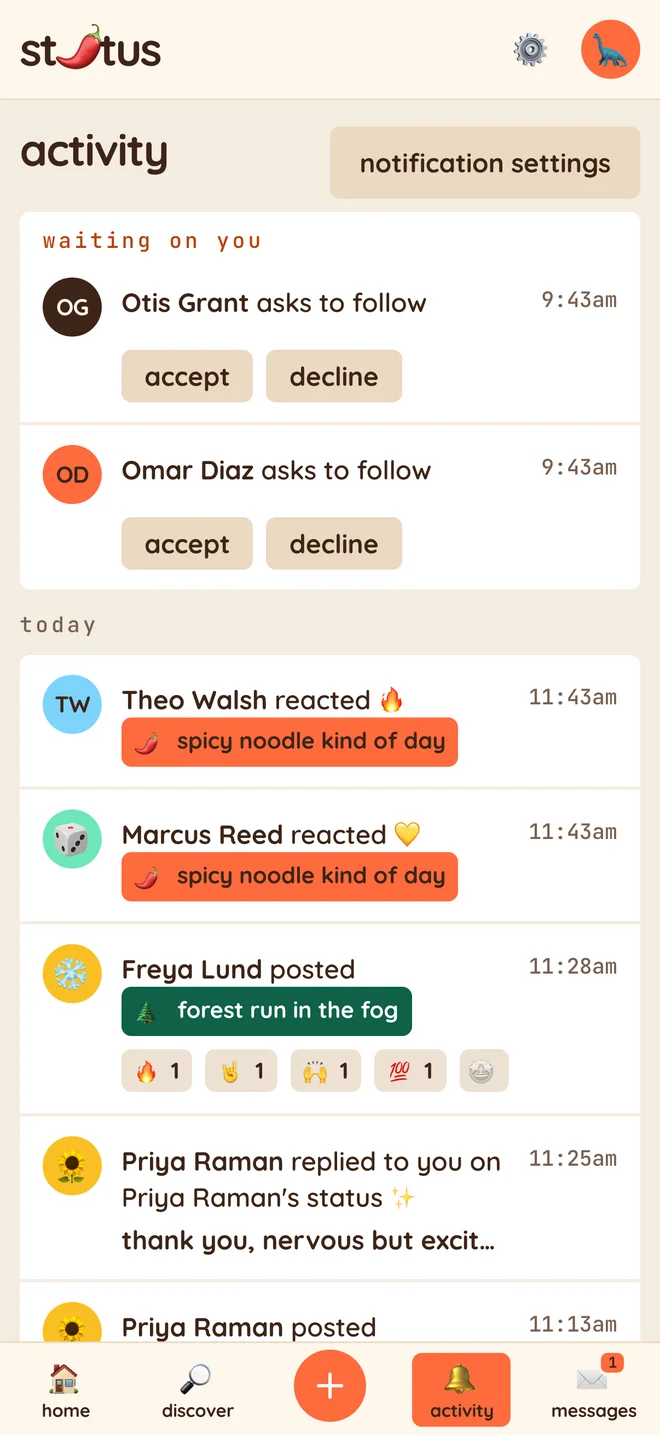
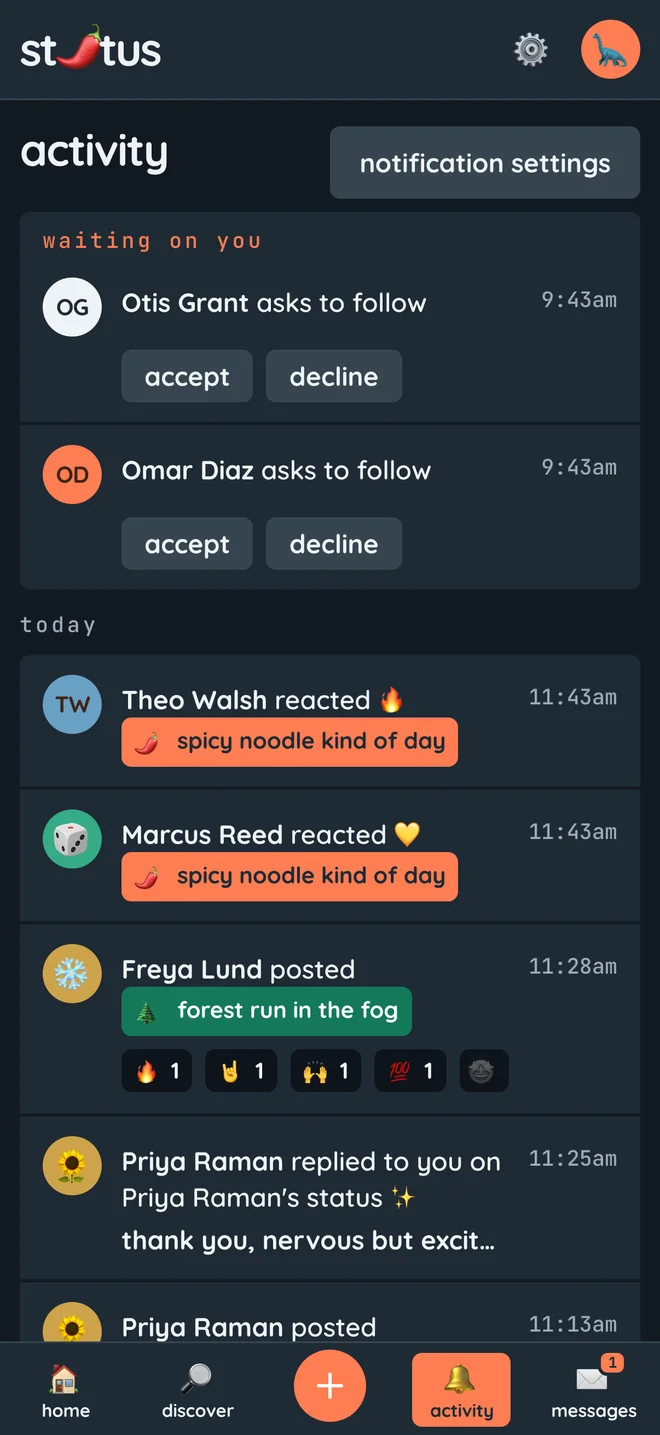
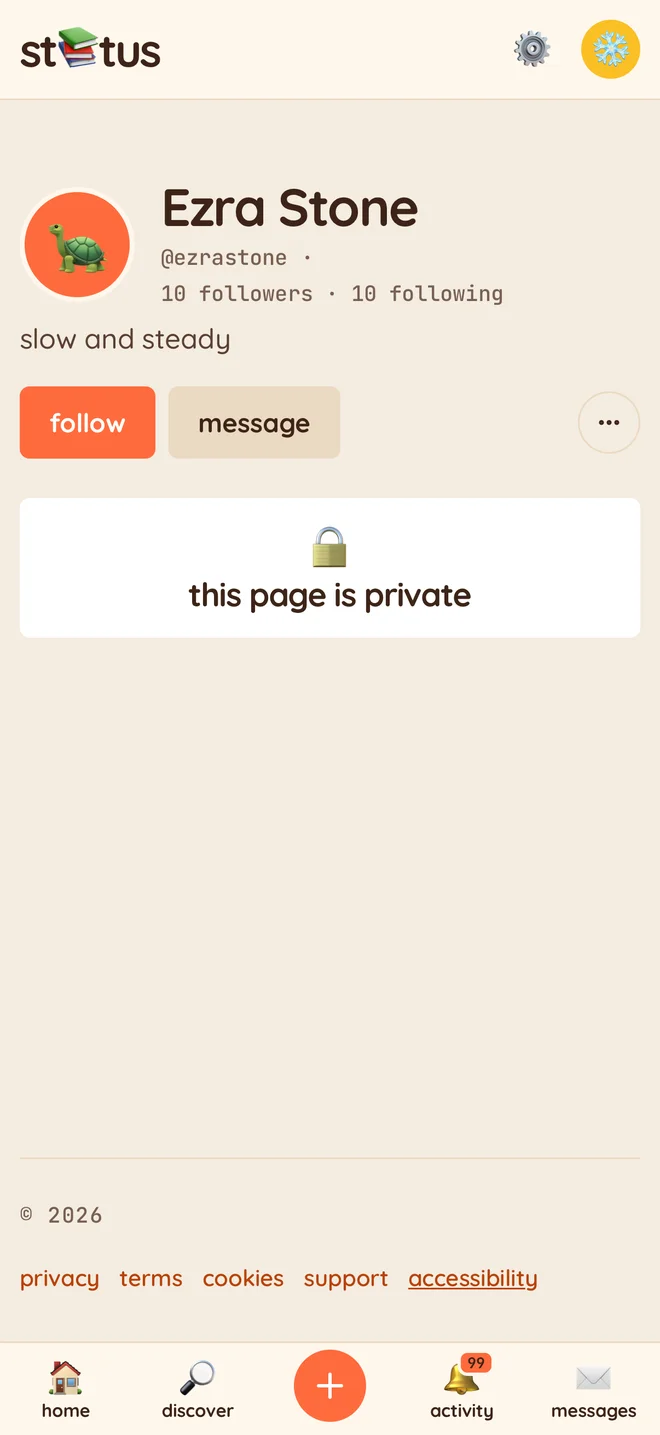
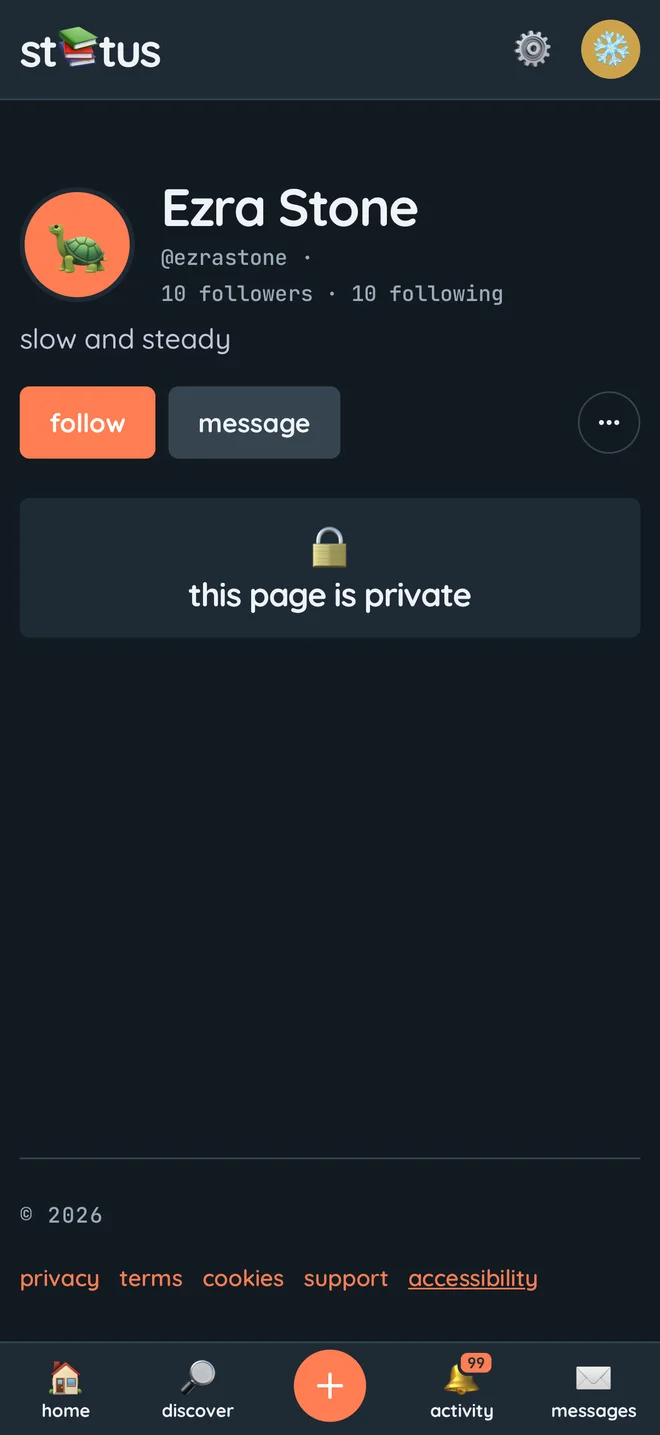
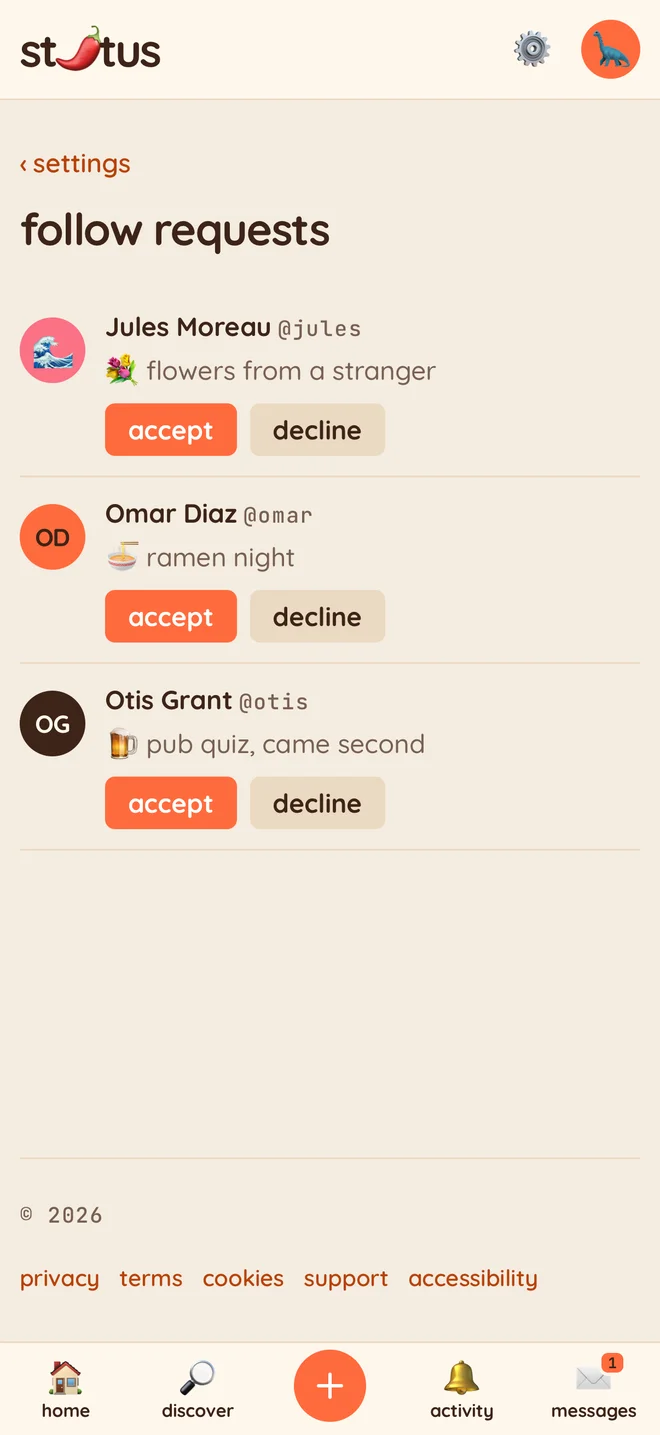
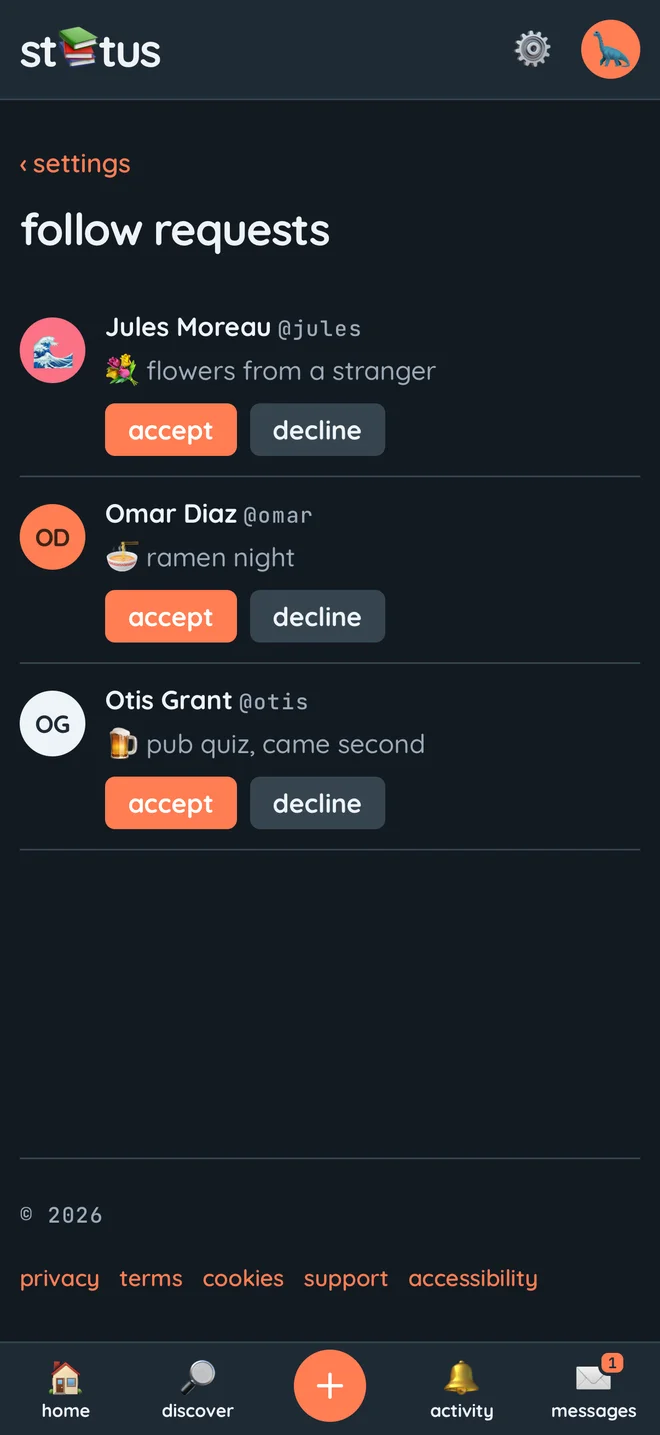
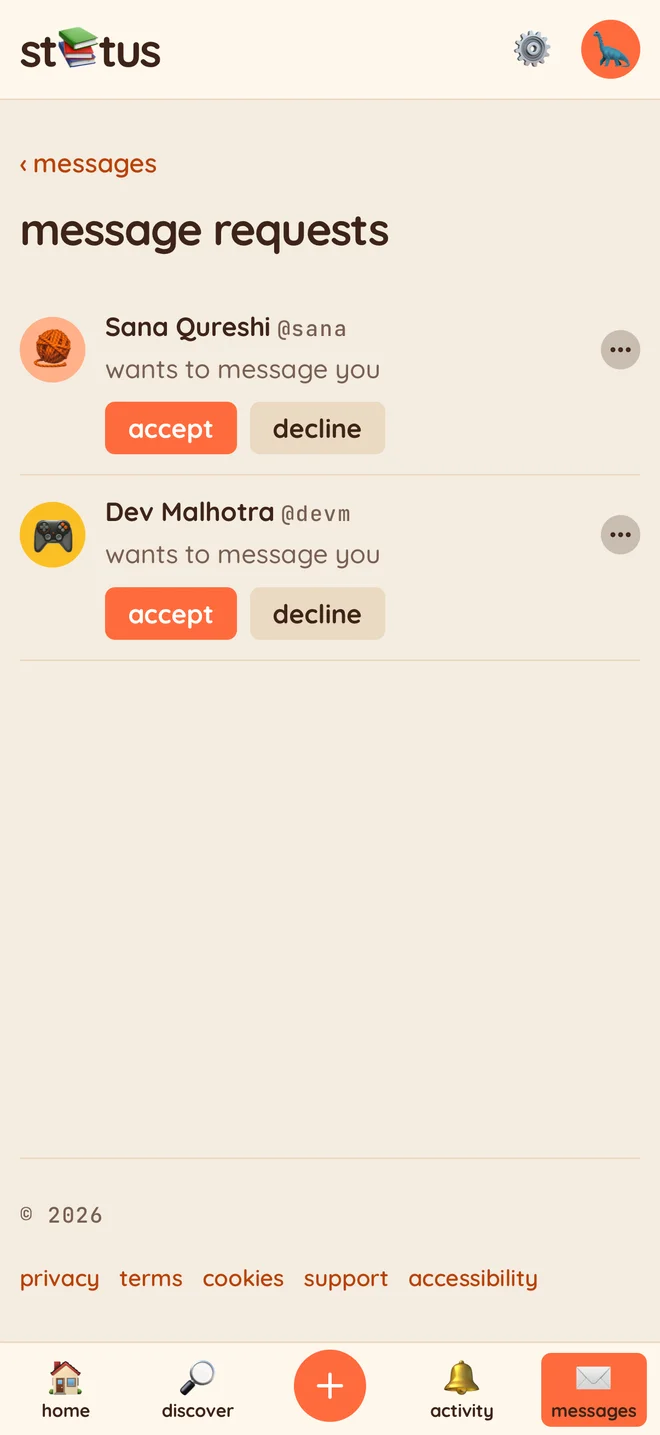
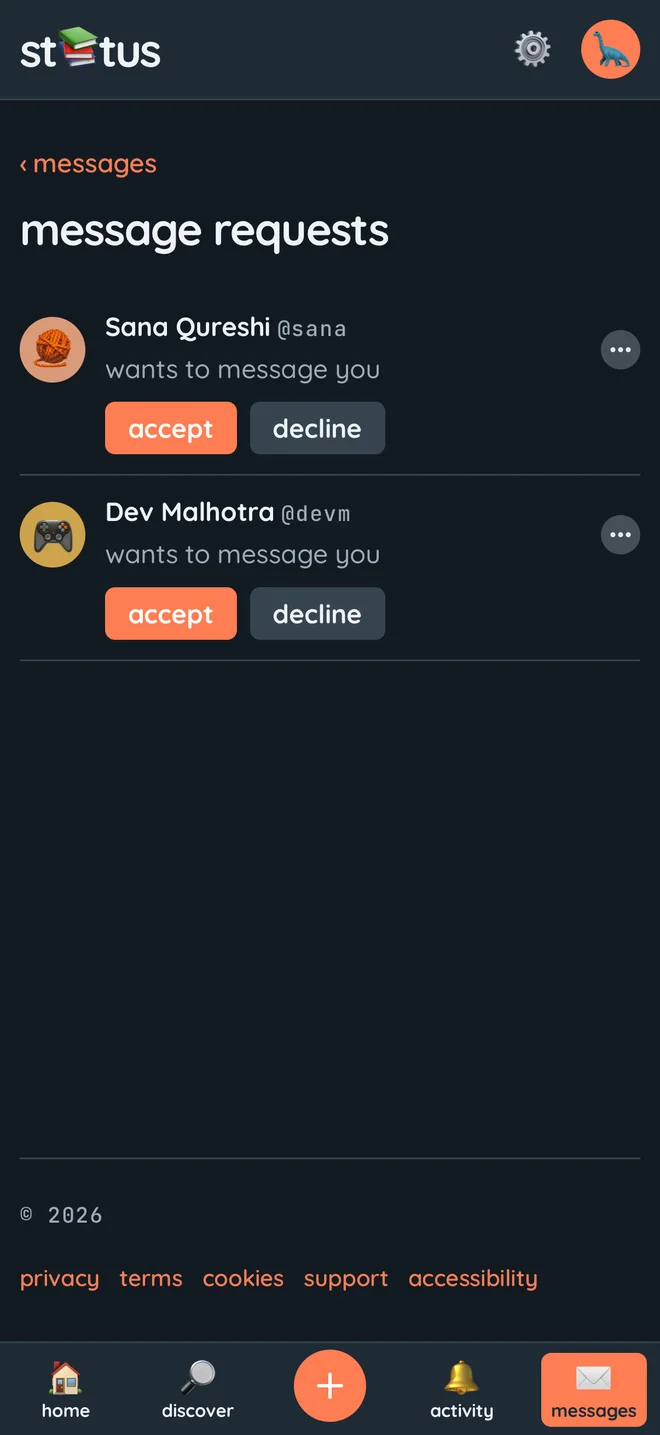
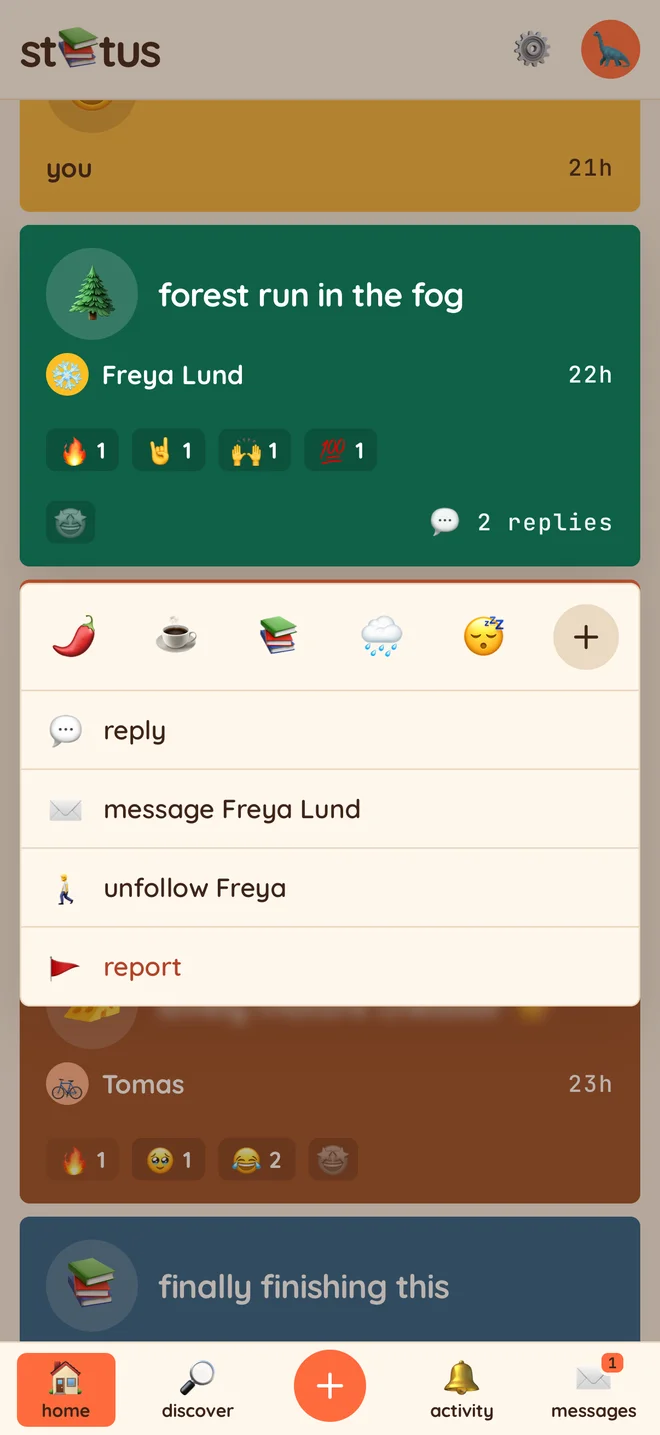
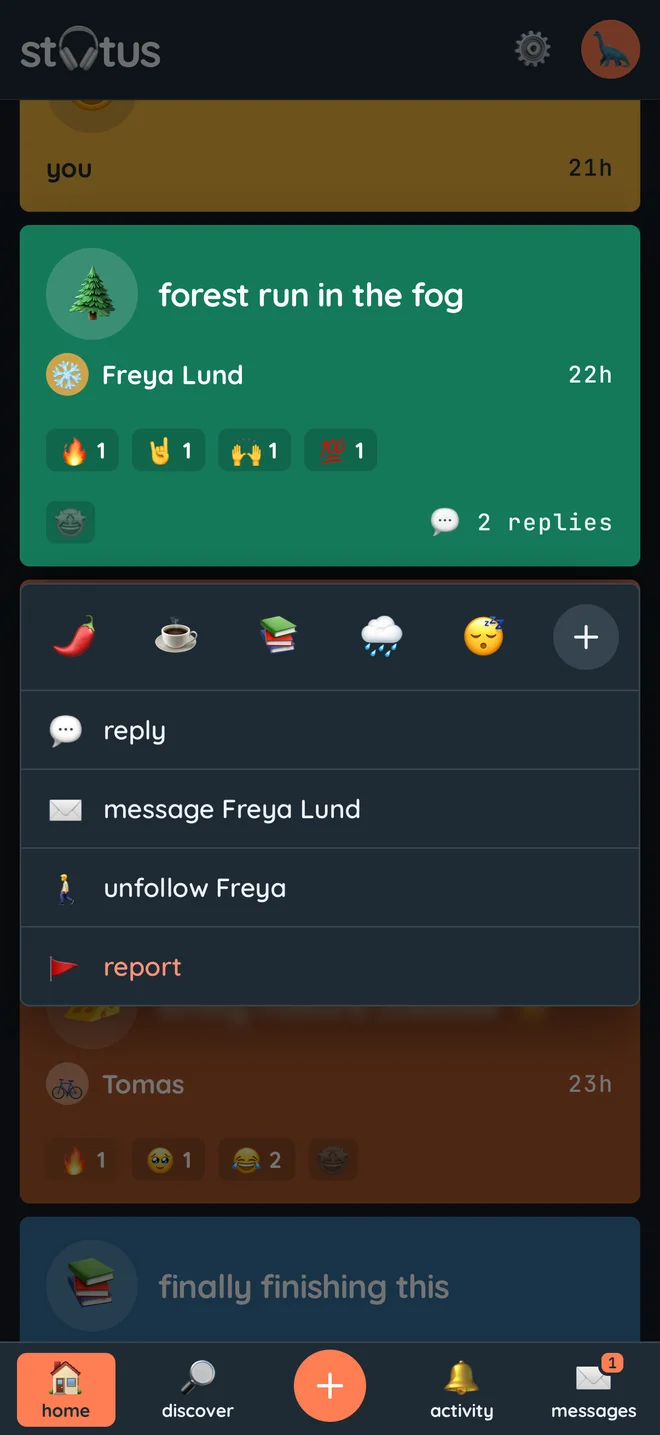
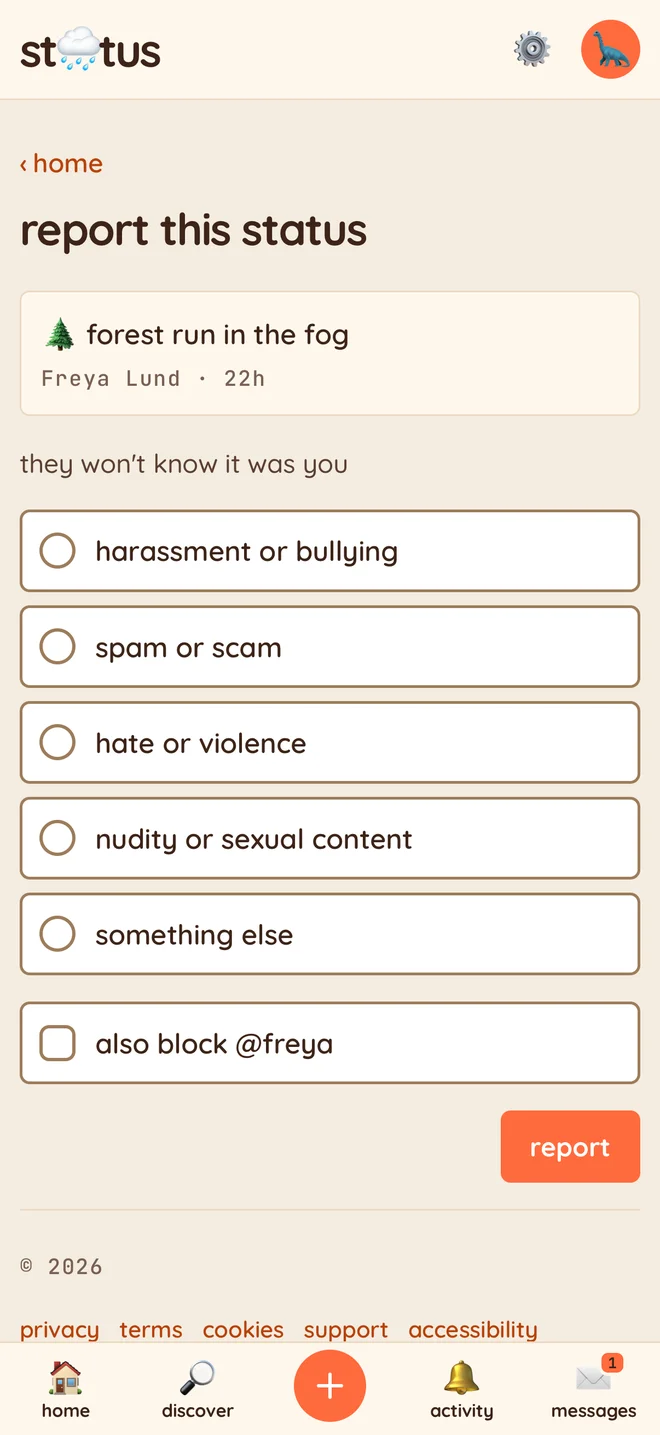
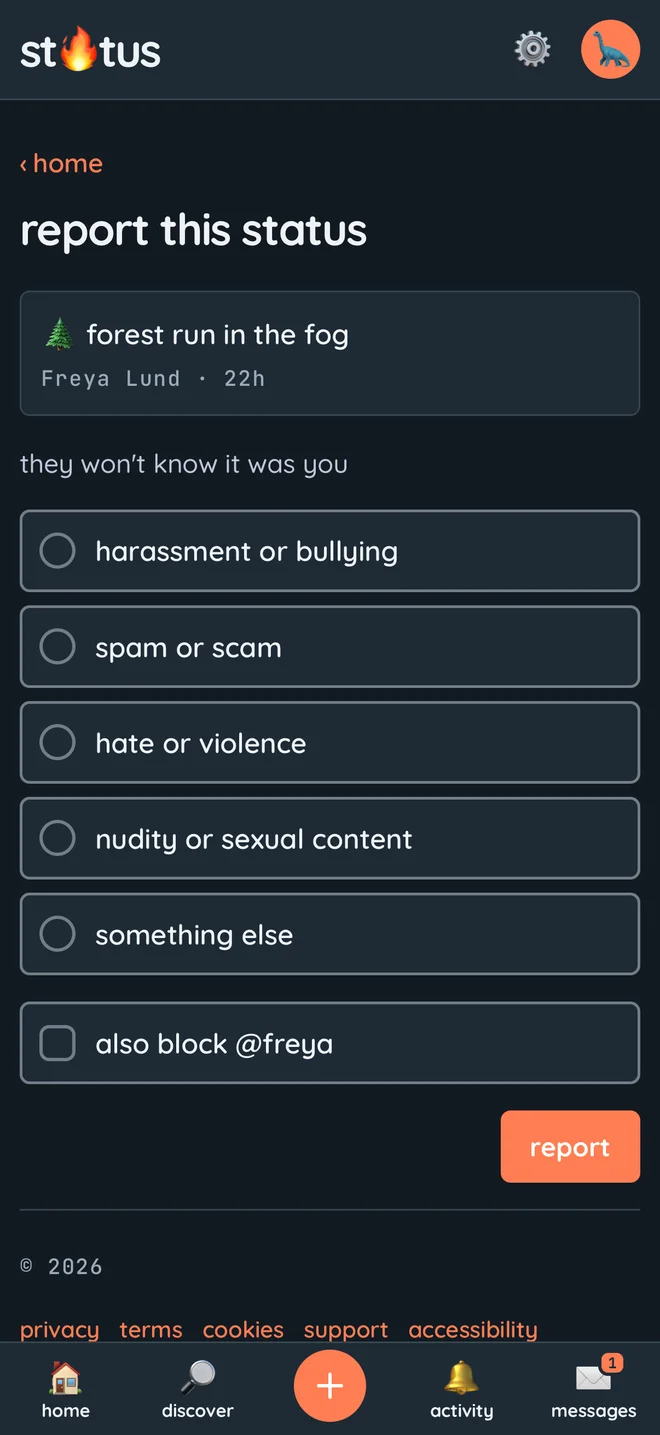
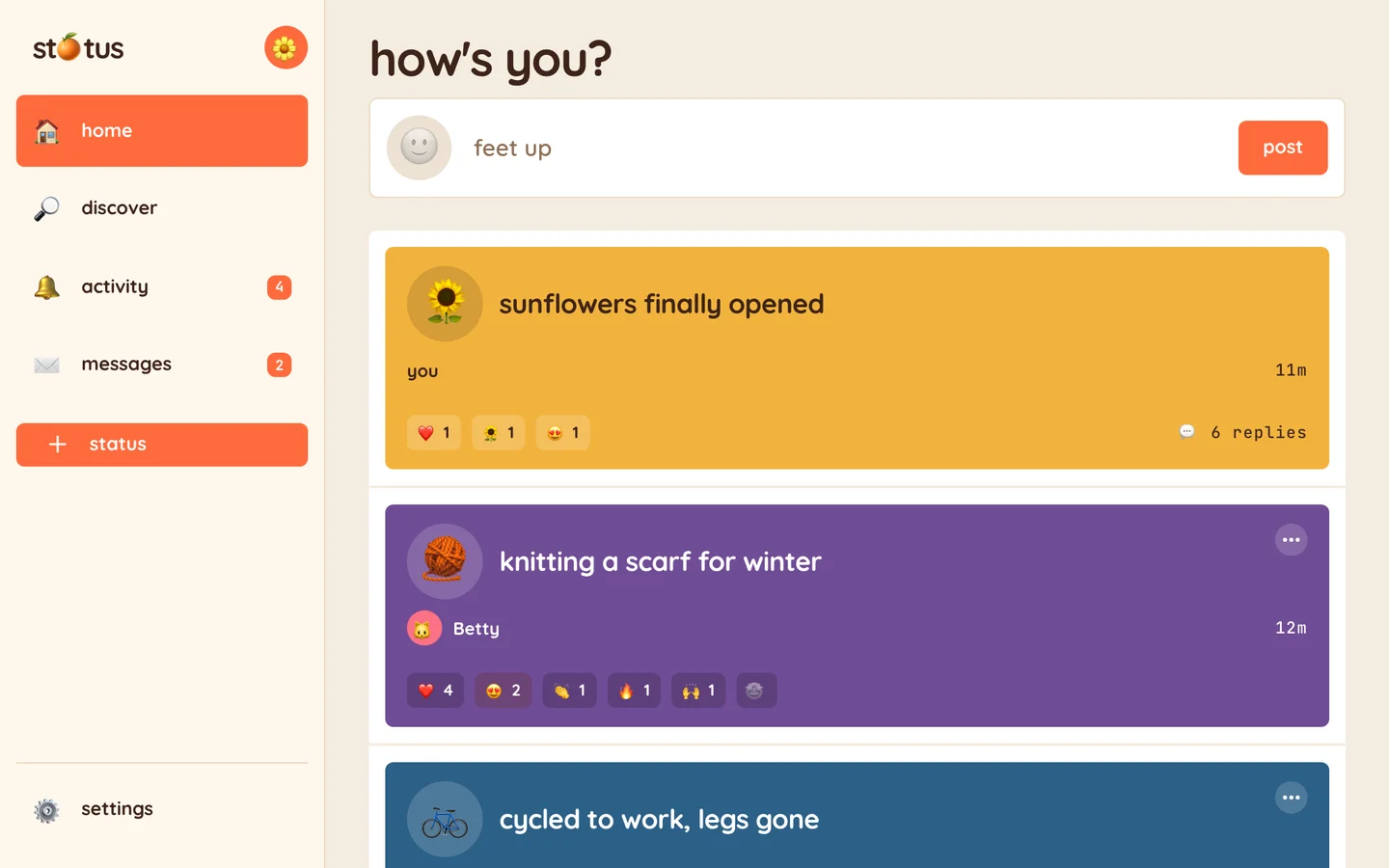
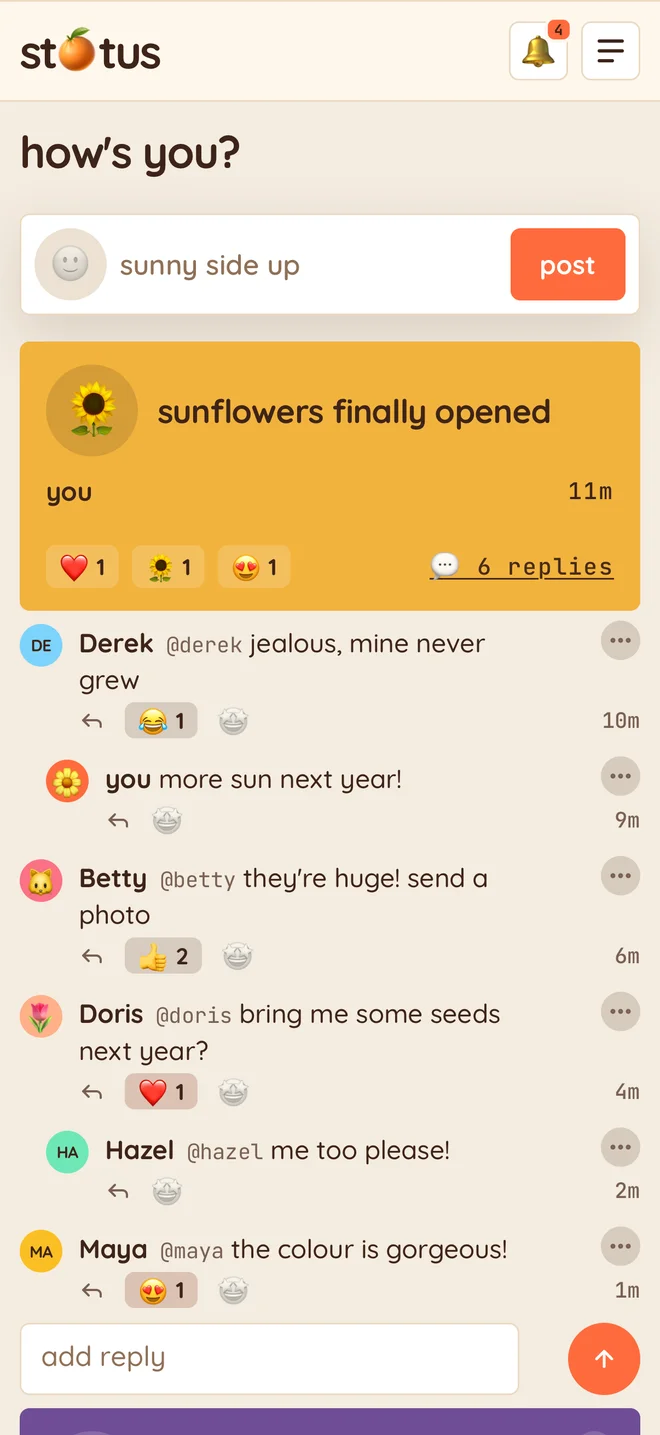
It's all about breaking the ice. Keeping in touch takes more than it should. A full post feels like a performance, a message out of the blue needs a reason and sometimes it means saying something in a group chat. status is a simple app that provides an easy way to say what you're up to and start a conversation. Post an emoji and a few words. Your people see it pop up and can react, reply or message you for a natter.
If you wish to have a private group you can, "Katsu anyone? 🍛". Or if you wish to tell everyone what you're up to broadcast away "Holipops time 🏝️".
Everything has a status already: WhatsApp, Slack, Facebook. But there it sits on the side, something few people use in an app built for something else. status brings it up front and centre.
How it's built
Simplicity and speed: one thing, done well. I chose SvelteKit (opens in a new tab) and Fastify (opens in a new tab) because they are easy to work with and modern. TypeScript (opens in a new tab) makes my life easier. The iPhone and Android apps are Capacitor (opens in a new tab) shells around the live site. Capacitor has worked very well with SvelteKit.
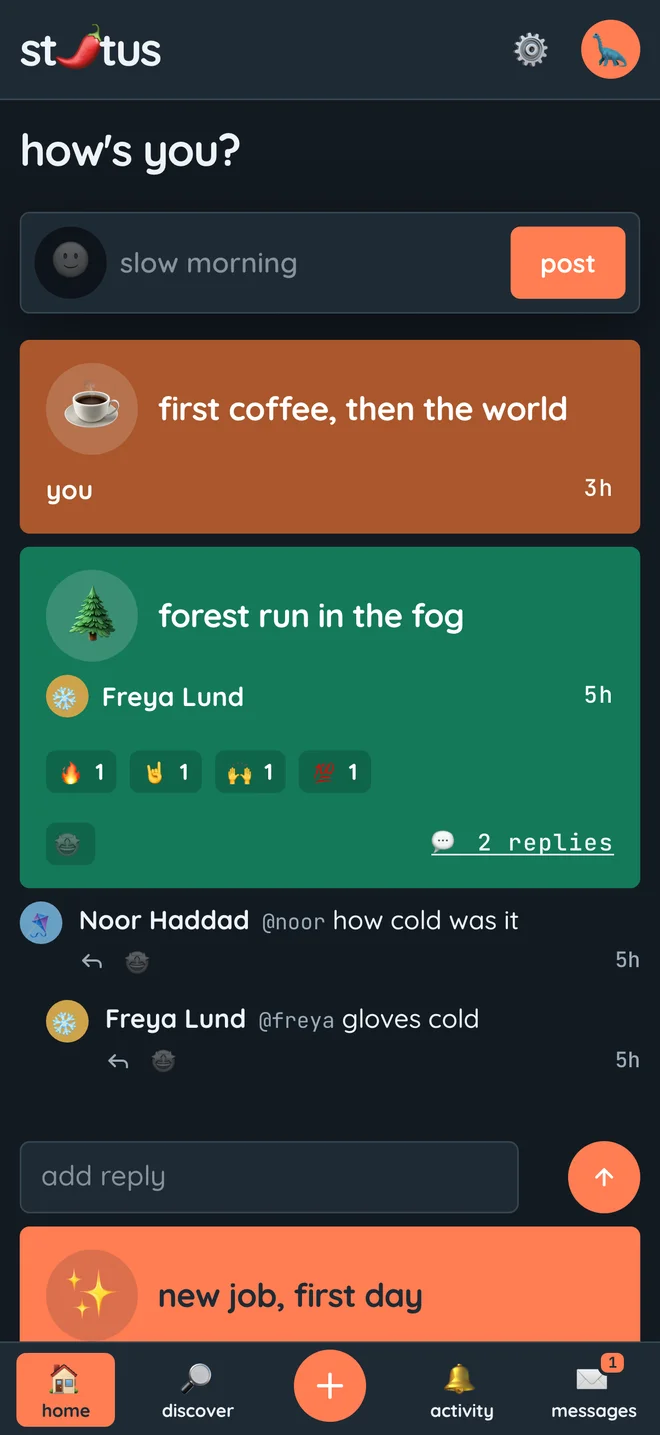
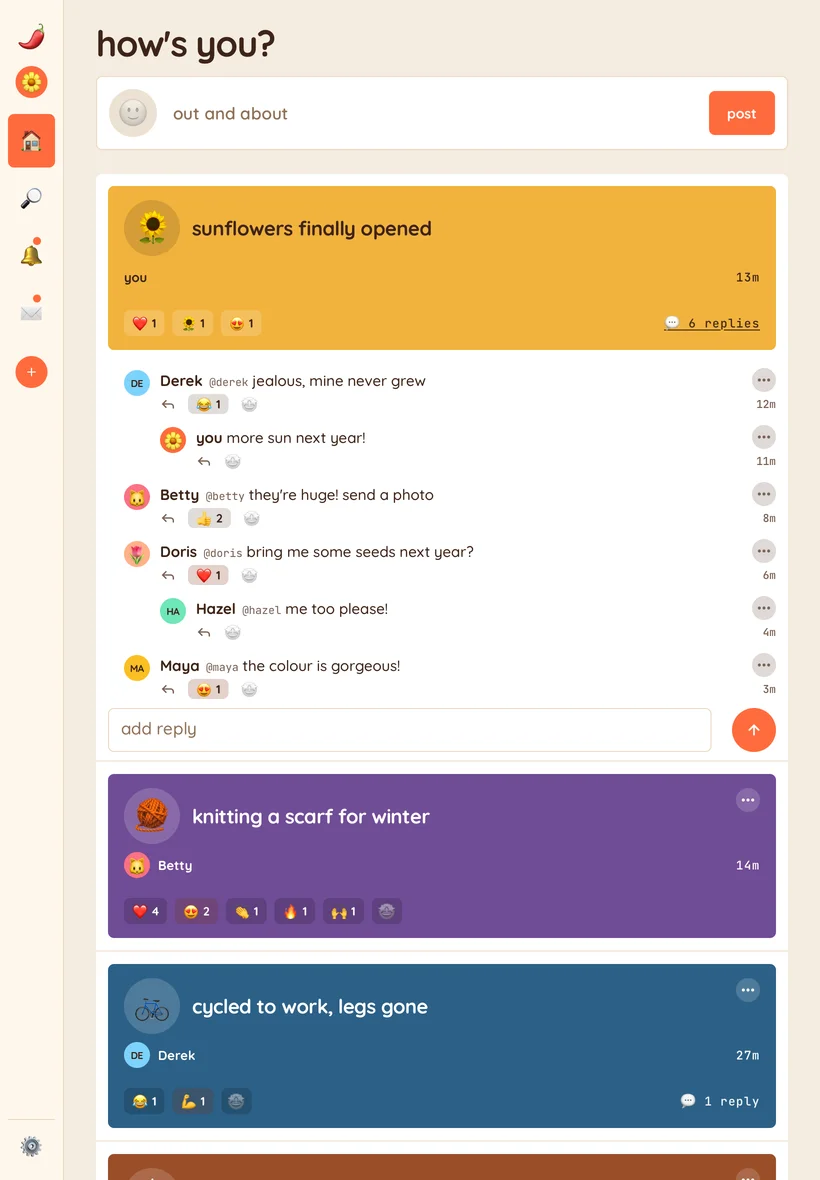
Replies, with room to read
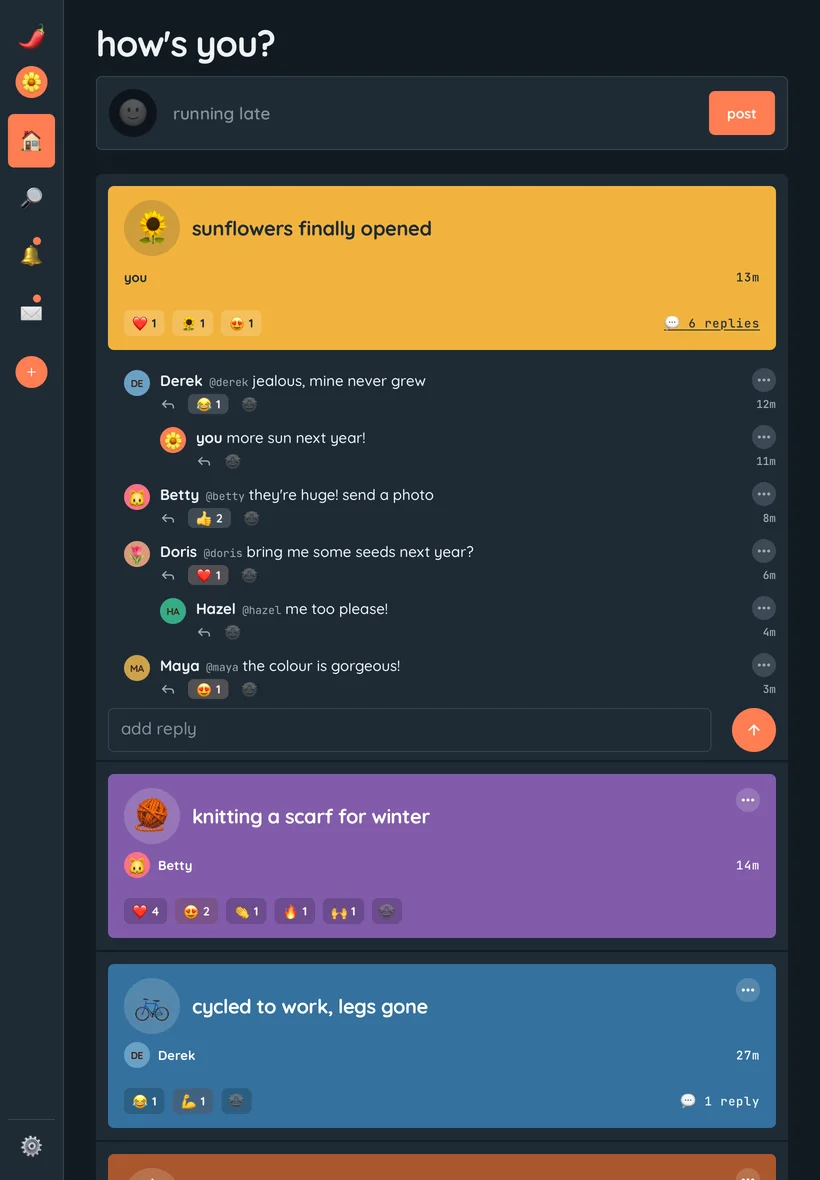
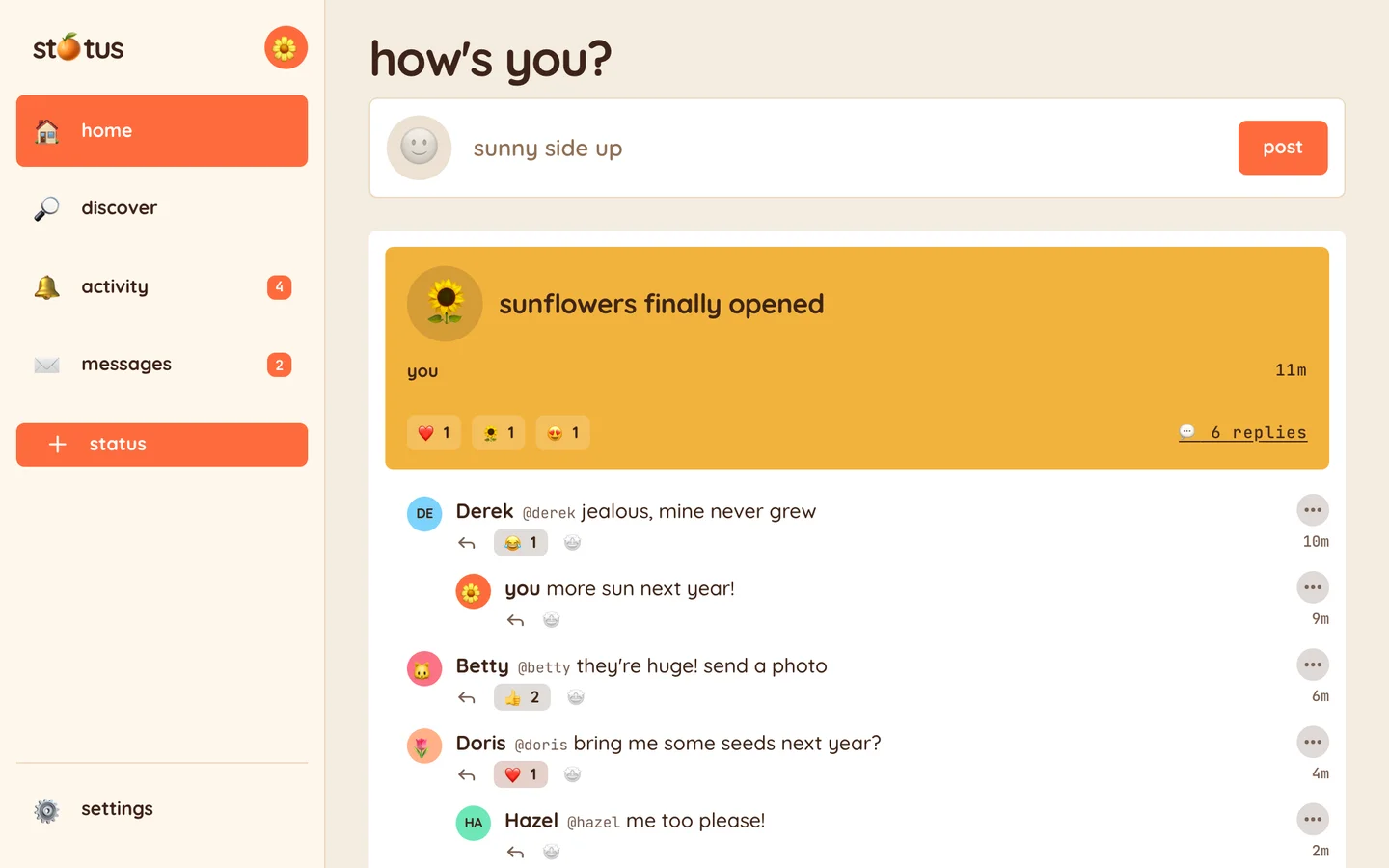
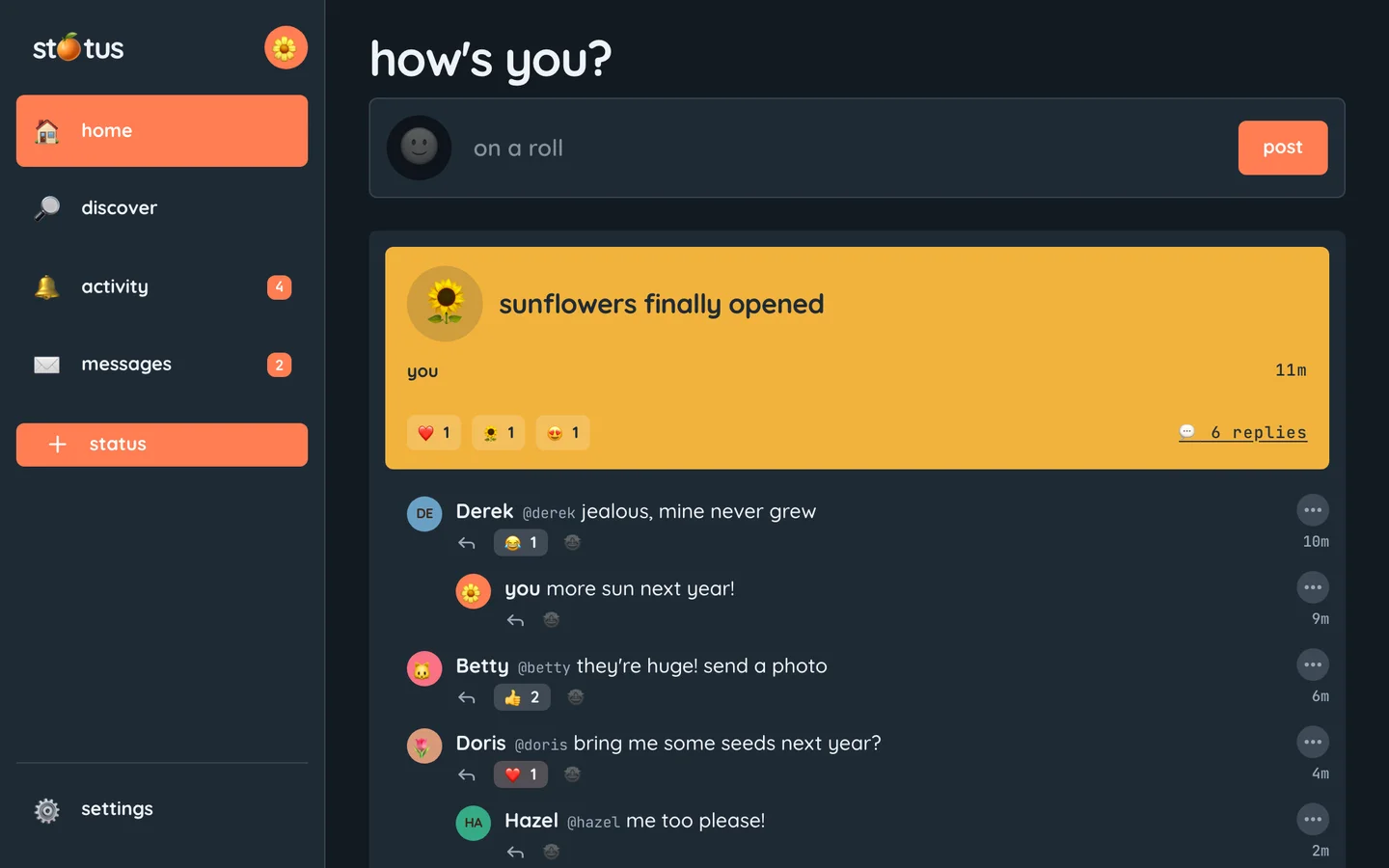
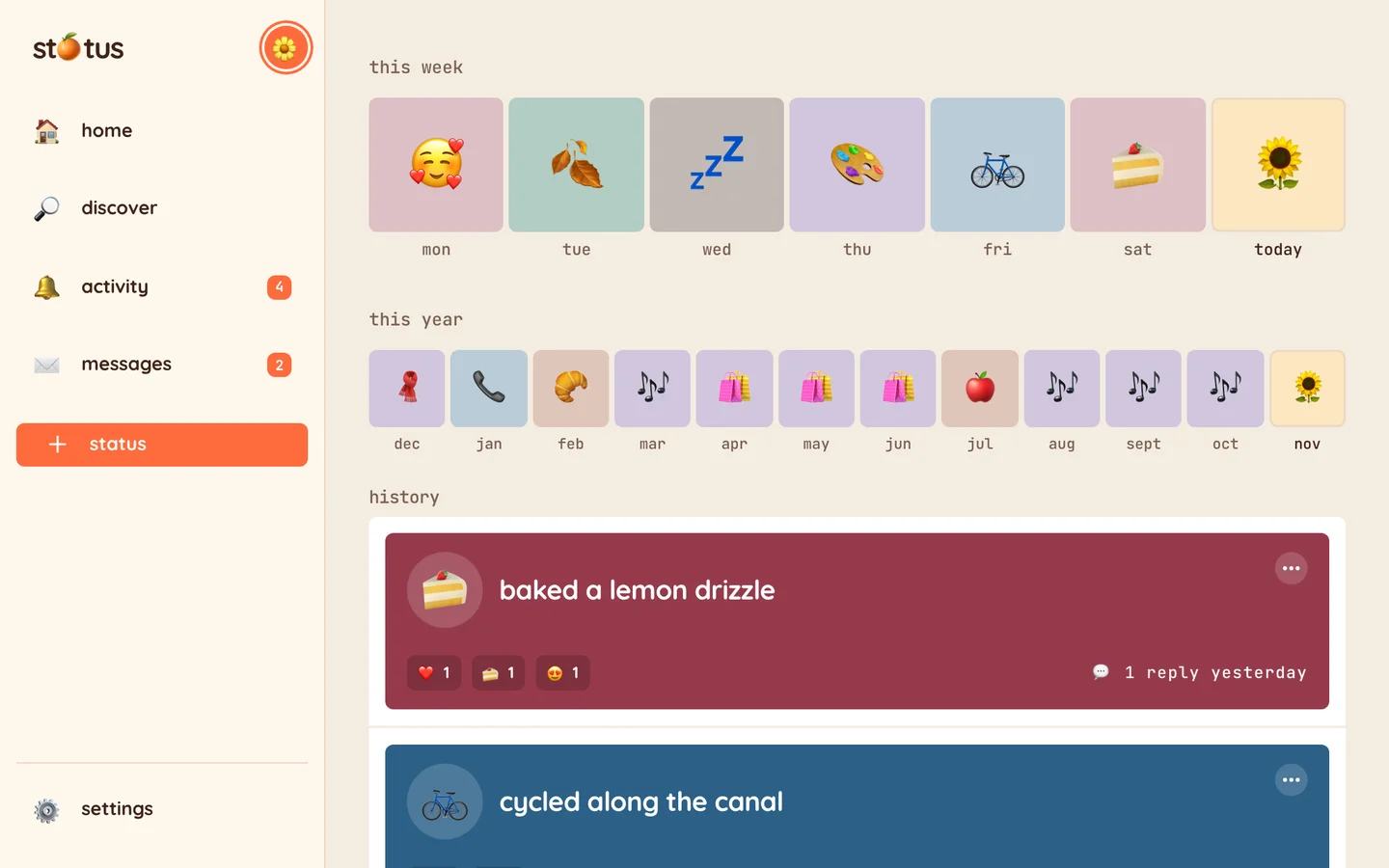
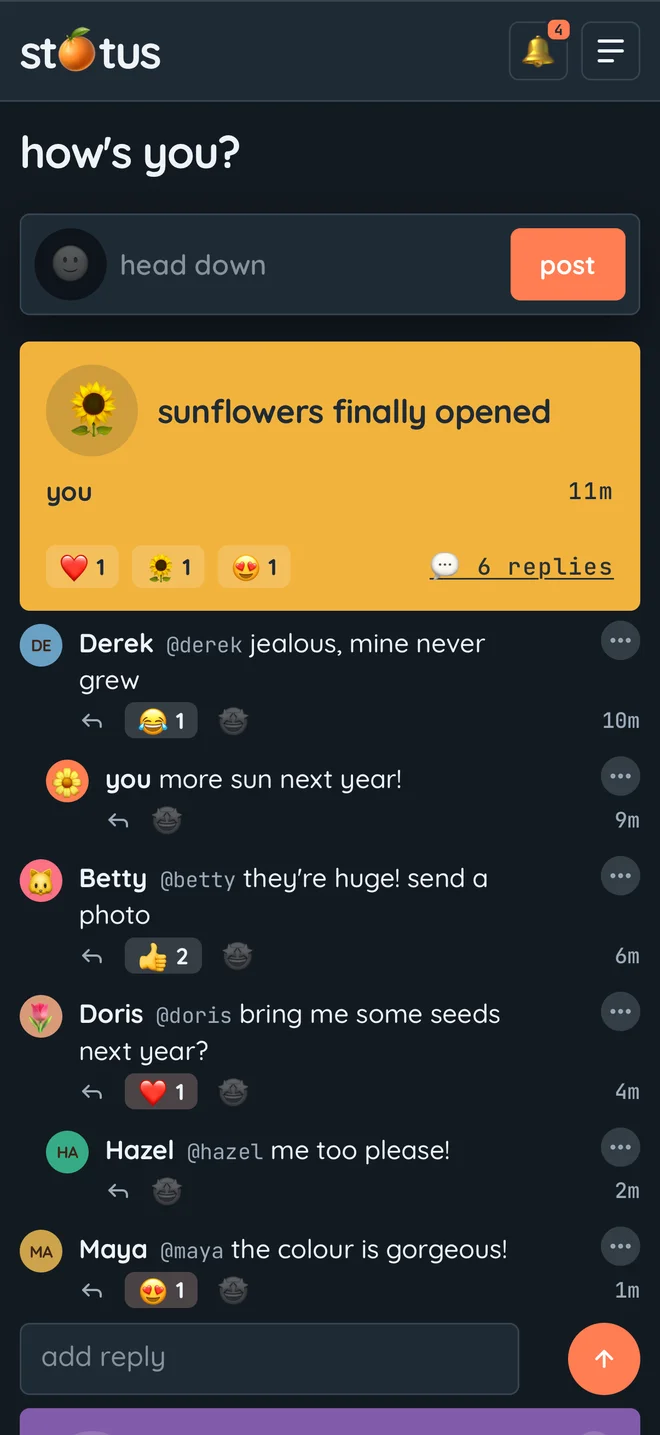
Open a status and the whole conversation sits beside the feed
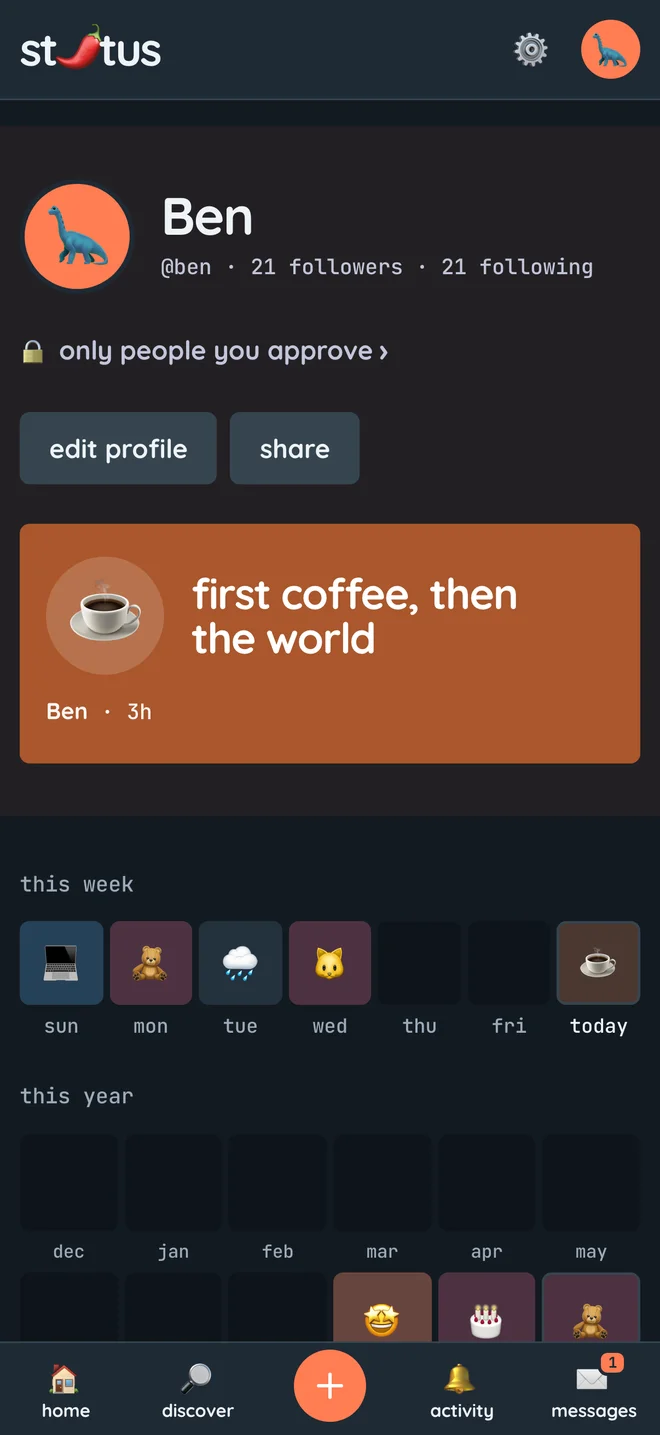
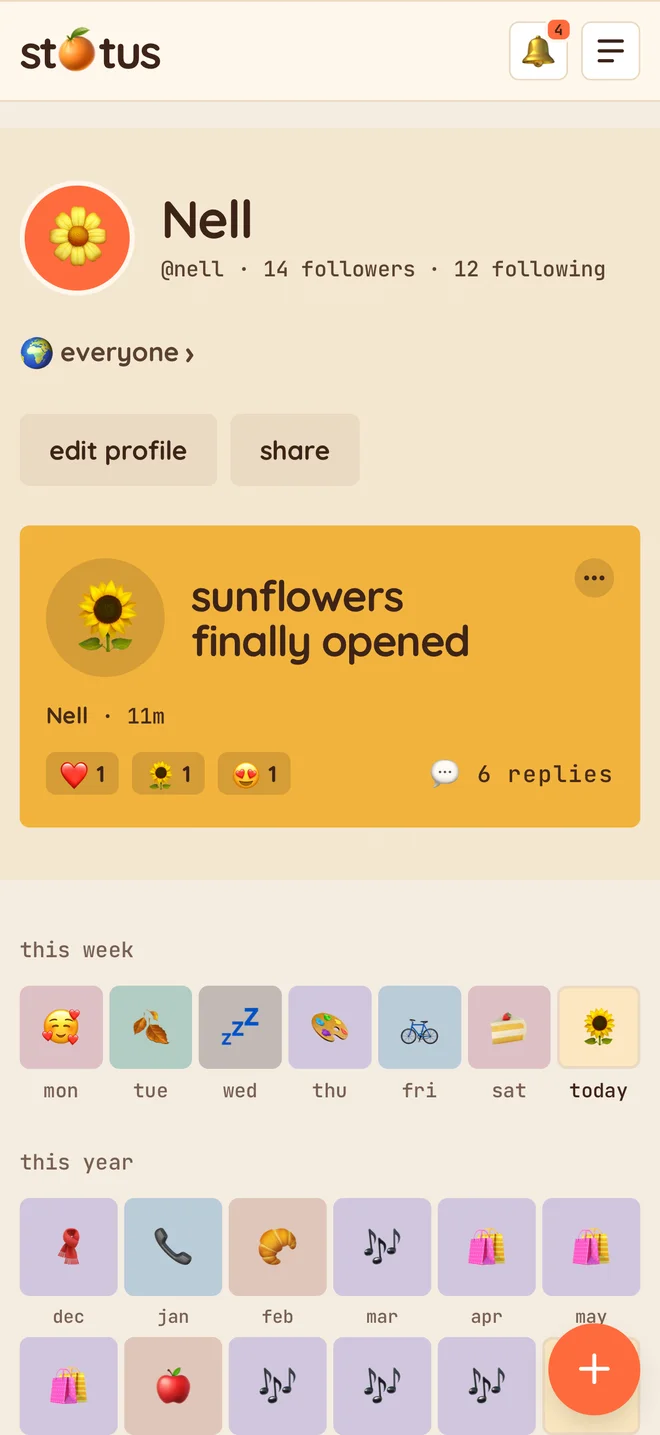
Your year, on a big screen
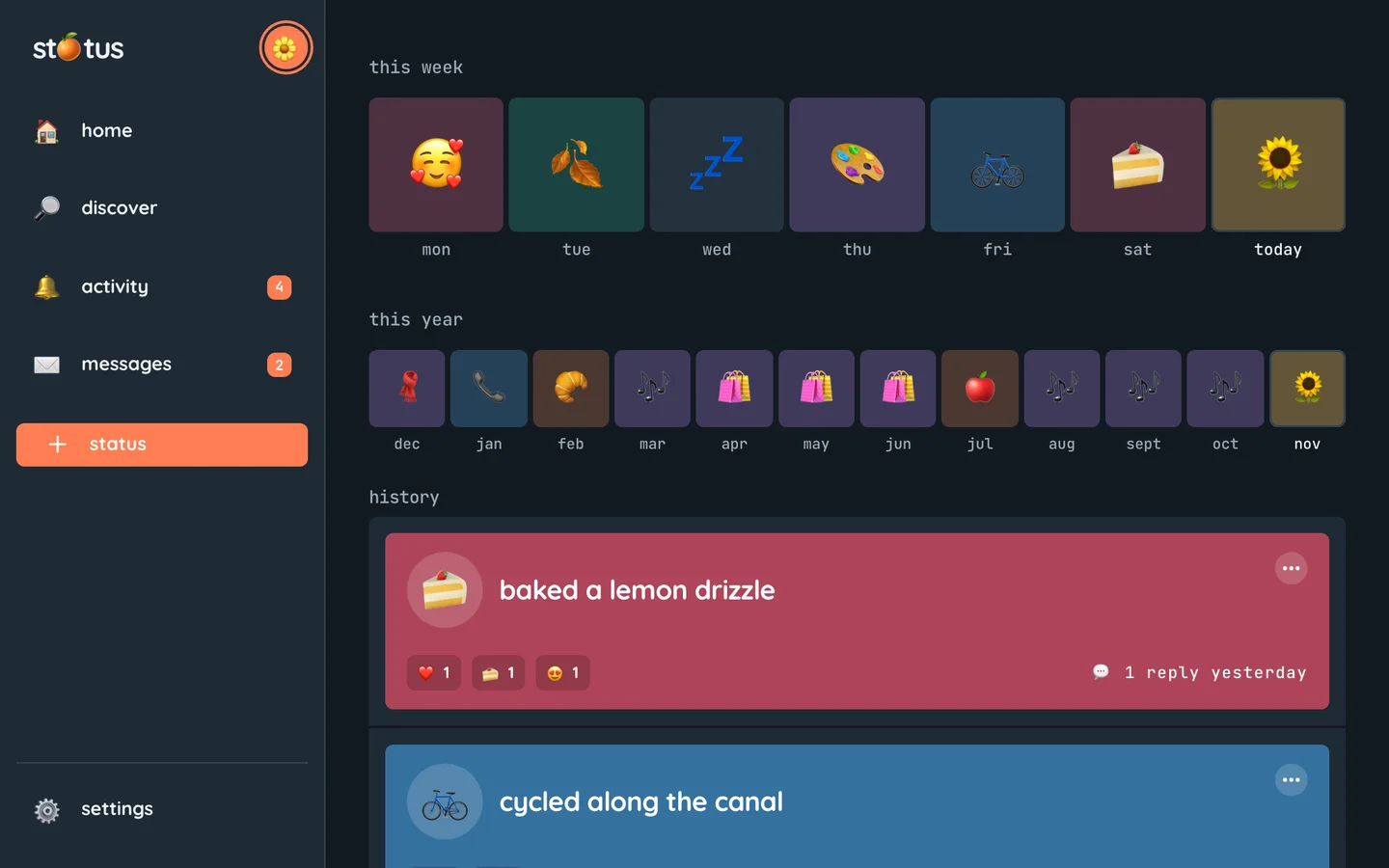
This week by day and this year by month
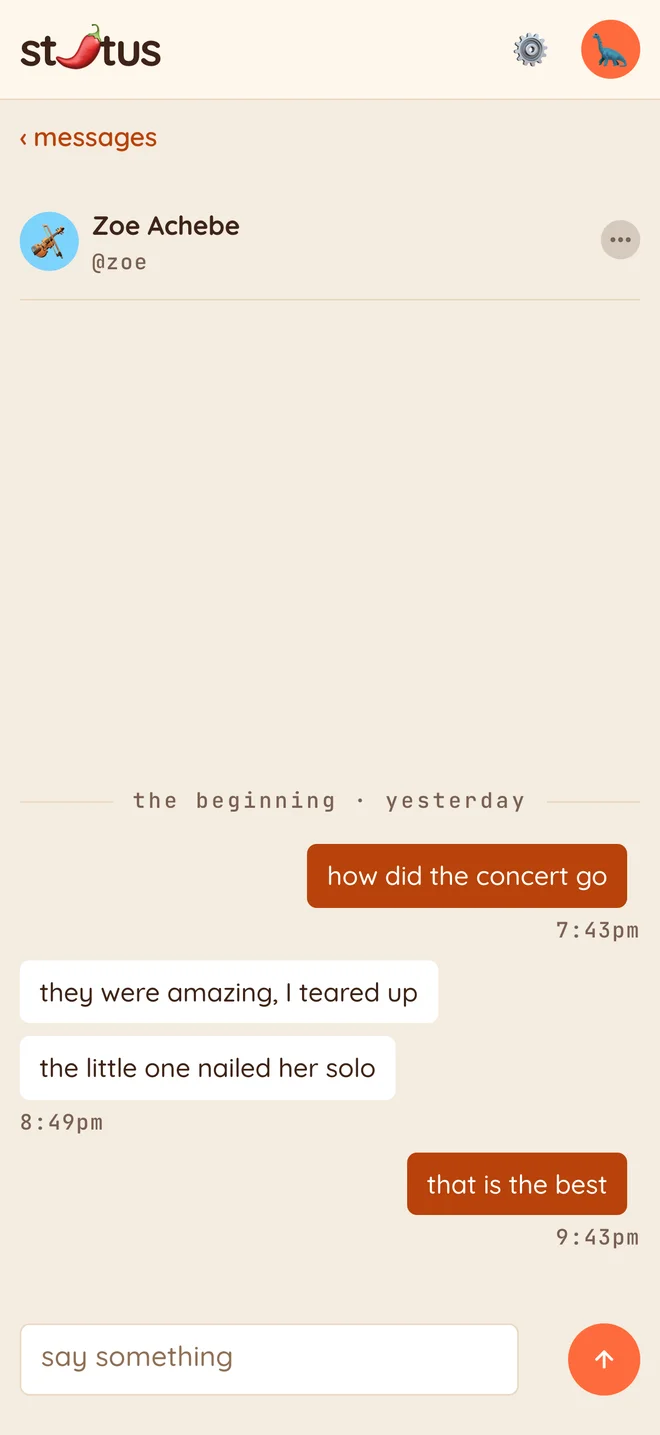
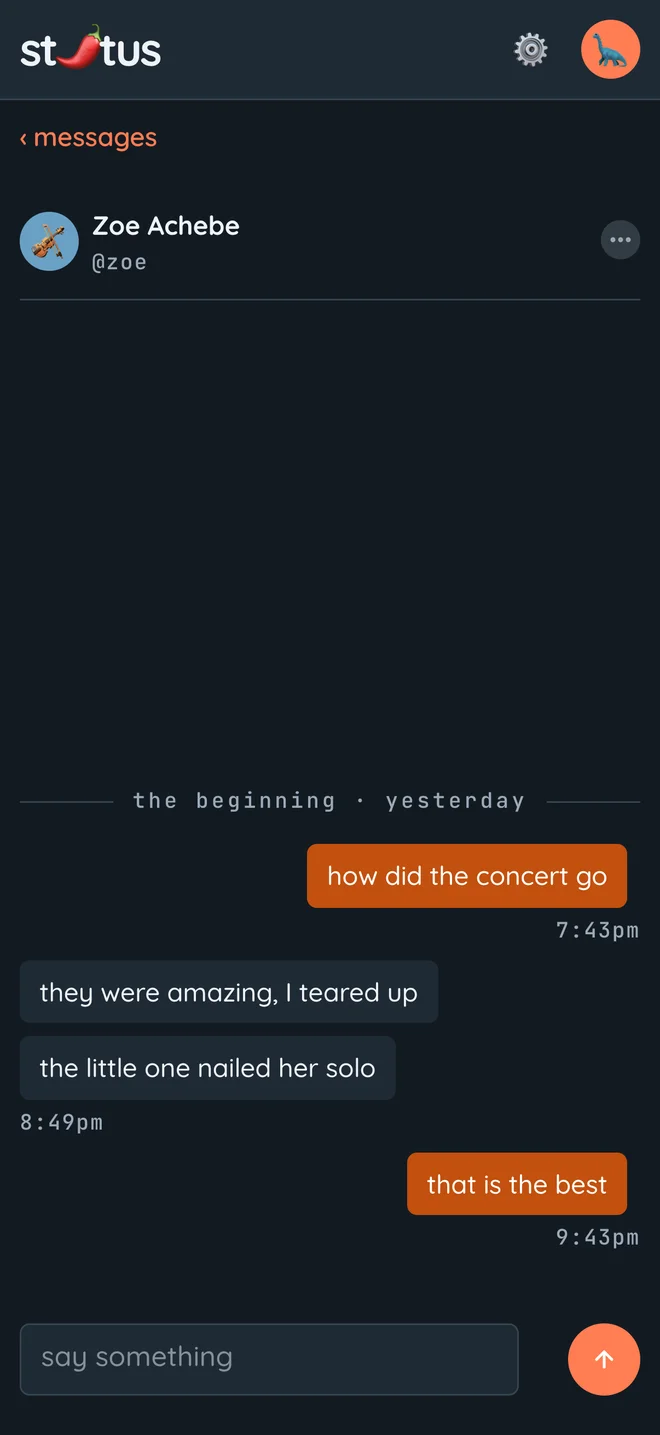
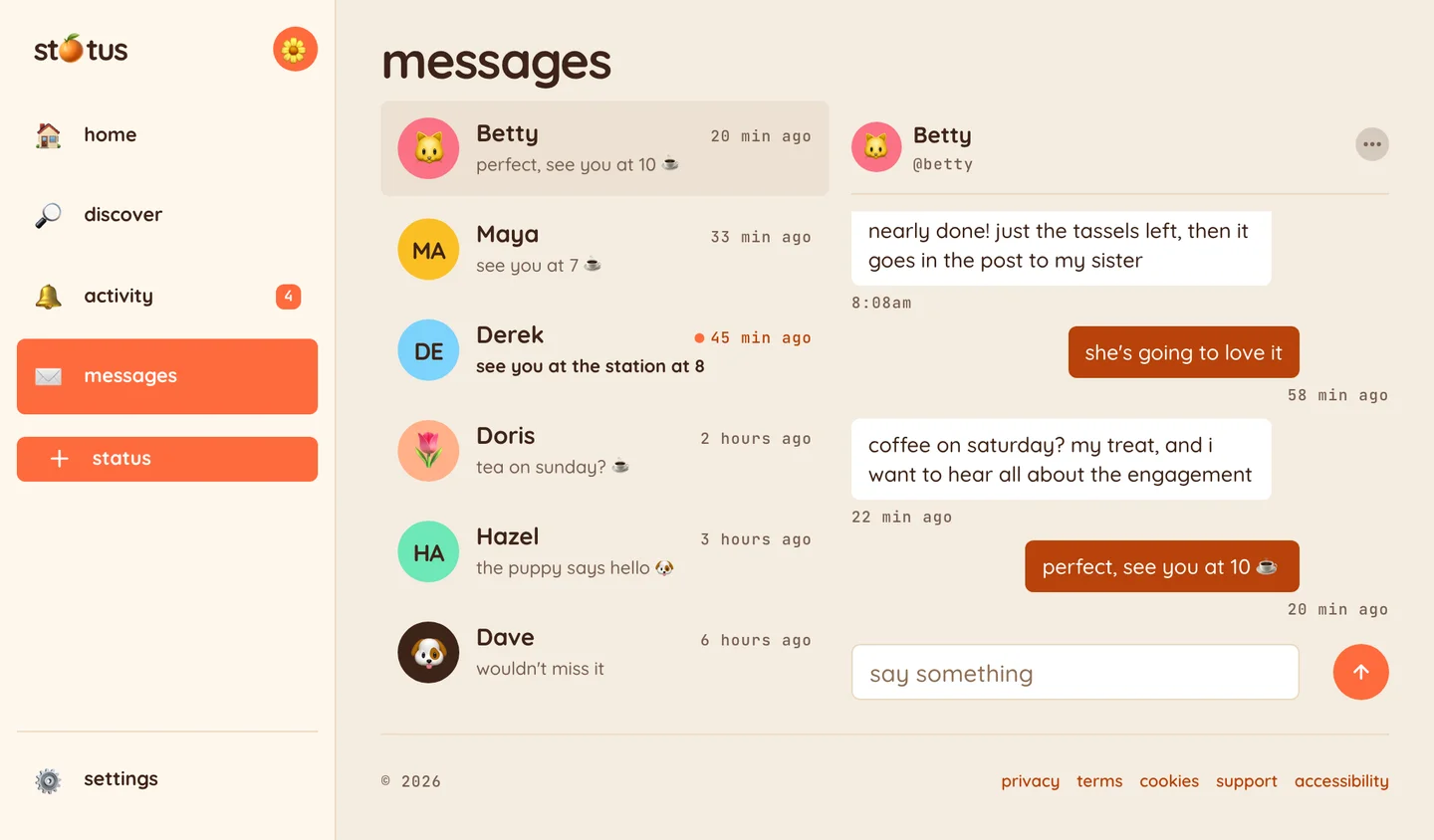
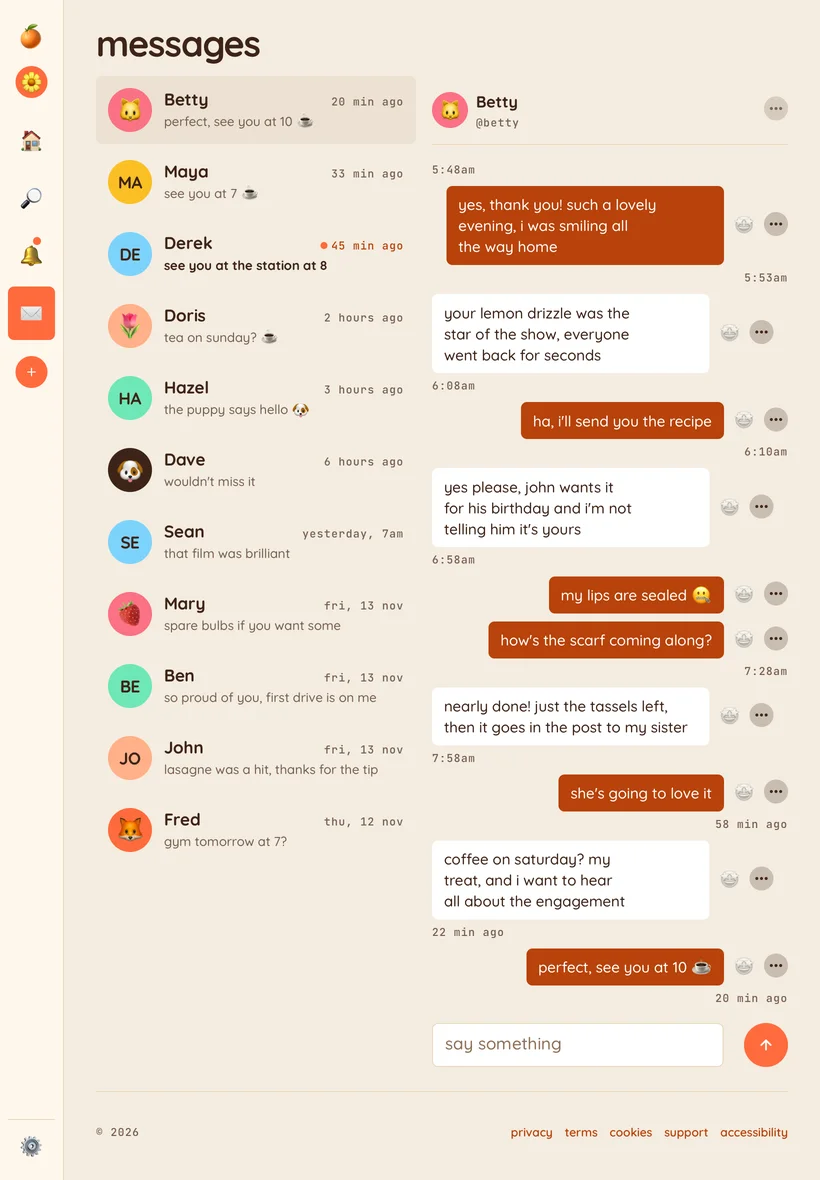
Natter beside your inbox
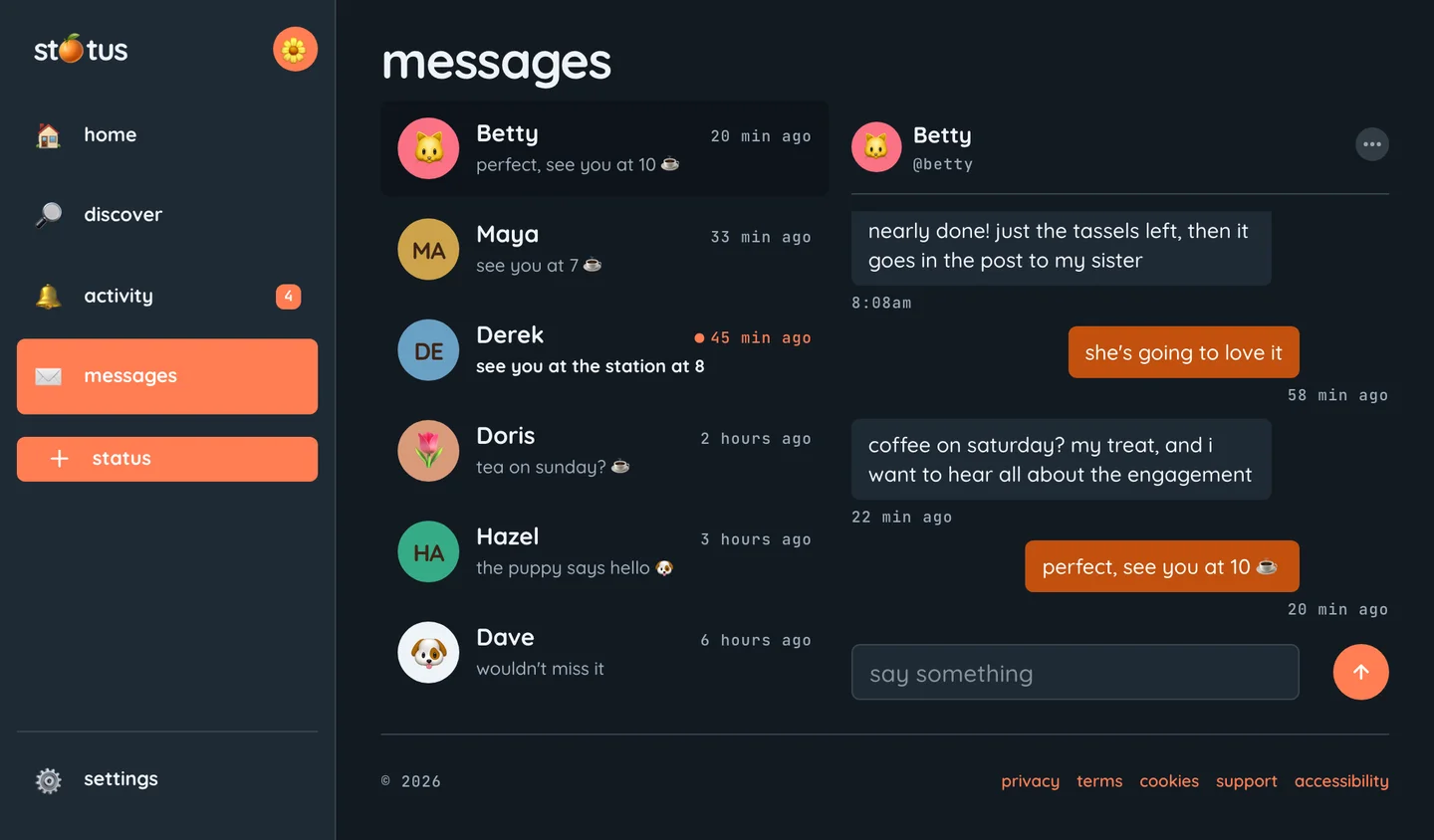
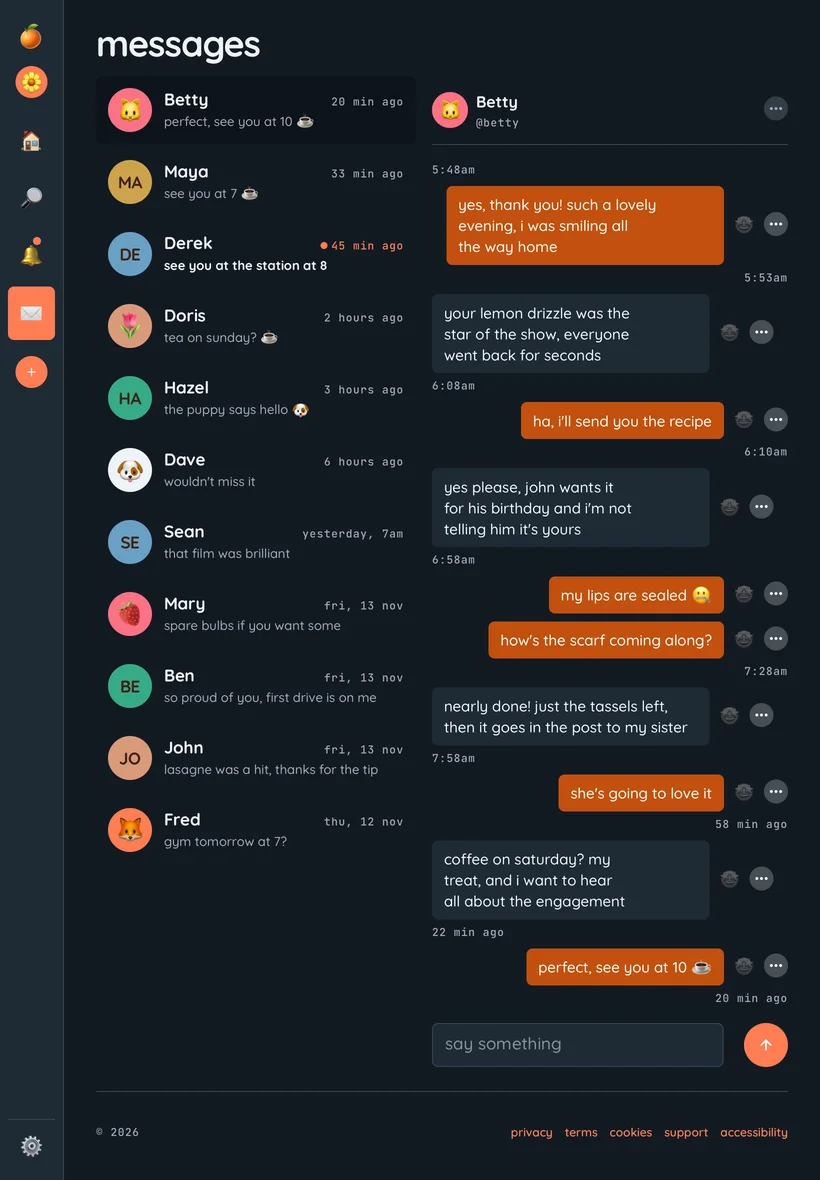
Conversations open right next to your messages
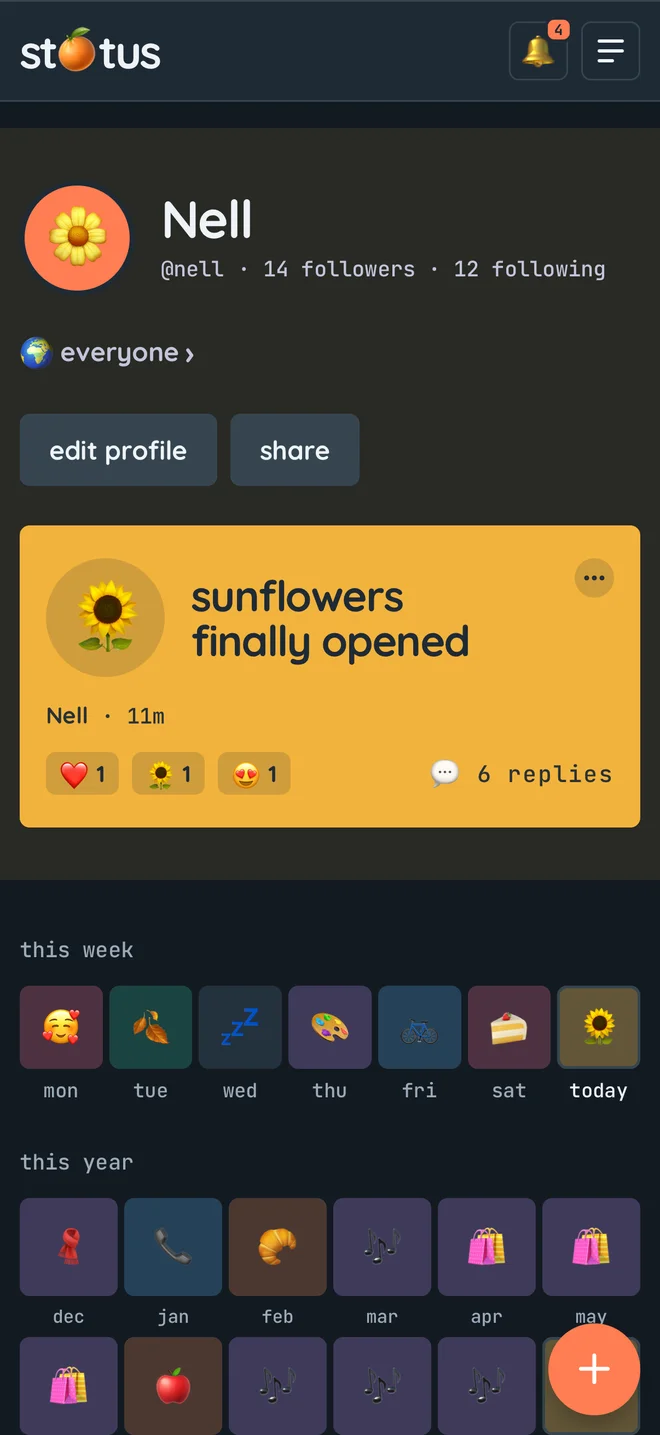
Made for all shapes and sizes
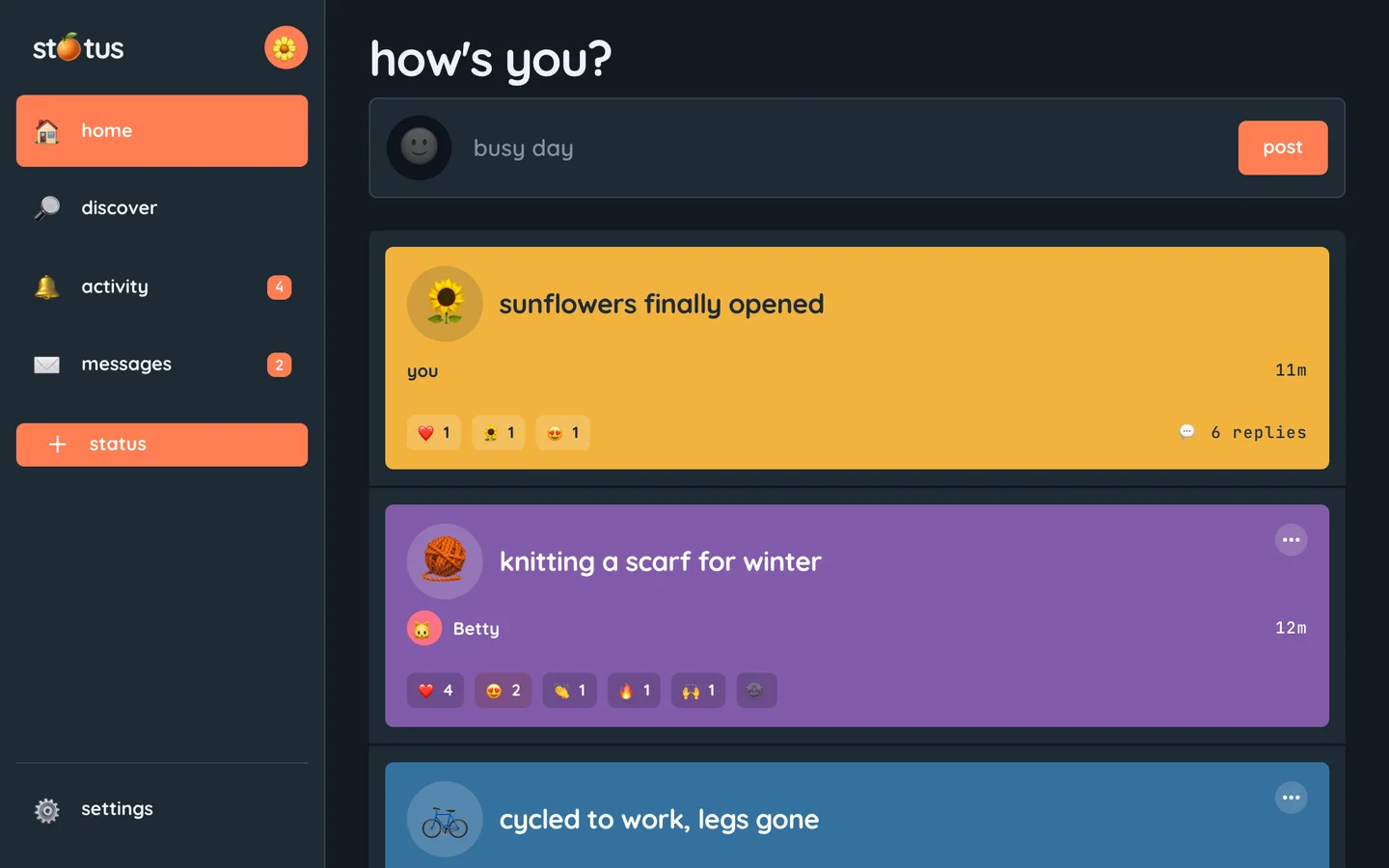
Phone, tablet or desktop, the apps or a snapped window: status fits whatever size you give it
Built with Claude
I start with detailed requirements, written like architecture decision records (ADRs). From those ai-dev-tasks (opens in a new tab) makes a product requirements document (PRD) and a task list. Then I write briefs for Claude Design (opens in a new tab) (CD to its friends). A handoff I'm happy with usually takes a few tweaks in CD. Claude Code (opens in a new tab) (CC) then builds it with my own skills for design to code and for principles (opens in a new tab), so there are rules for how things are built and a way for CC to know the build matches the design.
Claude is great when:
- you give it the right context
- a harness for how to build and what to build
- keep the instructions, rules, tests, context and skills up to date and lean
- use caveman (opens in a new tab) to keep Claude concise
- rtk (opens in a new tab) to save tokens
- utilise hooks for things like cleaning up worktrees and pruning Docker and stopping local servers, stopping Claude going wild with comments and many other helpful tasks hooked into Claude's lifecycle
I steered all the way: writing the ADRs and PRDs and teaching it how to build through skills and context. Then I checked what was built by looking it over, making sure it's done correctly and iterating and teaching if it's not. The final polish came from using the flows as a user would. That's where the tweaks come from that make it work as a whole.
My tip: pay attention. If you don't tell the robots how to behave and then check how they behaved, you'll get something you didn't ask for.
Try it
This has been an immense amount of fun: a modern web app plus iPhone and Android apps, built with SvelteKit, Fastify and Claude (opens in a new tab). Try it at status.me (opens in a new tab) or in the App Store (opens in a new tab) and Google Play (opens in a new tab).